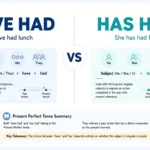
When learning English grammar, many students get confused about if to say “didn’t have” or “didn’t had.” The correct form is “didn’t have.” We use it when talking about something that was not available, owned, or experienced in the past. For example, “I didn’t have enough money yesterday” is correct, while “I didn’t had enough money yesterday” is incorrect.
The reason is simple: “Did” is the past form of “do,” so the main verb after “didn’t” must use its base form. The base form of “had” is “have.” Therefore, even though the sentence refers to the past, we say “didn’t have,” not “didn’t had.”
Understanding this rule will help you speak and write English more naturally. If you are a student preparing for an exam, an English learner practicing daily conversations, or someone improving their grammar, this guide explains the difference with clear rules, examples, common mistakes, and easy memory tricks.
Quick Answer
“Didn’t have” is correct, while “didn’t had” is grammatically incorrect in standard English. When using “did not” or its contraction “didn’t,” always use the base form of the main verb. For example, say “She didn’t have time,” not “She didn’t had time.”
Why Do People Confuse “Didn’t Have” and “Didn’t Had”?
People often confuse these expressions because both “did” and “had” are associated with the past.
The word “had” is the past tense of “have.” Therefore, learners may think that they need to use “had” after “didn’t” to make a sentence past tense.
However, English grammar follows a different rule for negative sentences and questions formed with “did.”
Consider these examples:
- Positive: I had a car.
- Negative: I didn’t have a car.
- Question: Did you have a car?
Notice that “had” changes to “have” when we use “did” or “didn’t.”
This happens because the auxiliary verb “did” already indicates the past tense. The main verb stays in its base form.
First Word: What Does “Didn’t Have” Mean?
“Didn’t have” is the negative past form of “have.” It means that someone did not possess, experience, receive, or have access to something at a particular time in the past.
“Didn’t” is a contraction of “did not,” and “have” is the base form of the verb.
Examples of “Didn’t Have”
- I didn’t have enough money to buy the phone.
- She didn’t have time to finish her homework.
- We didn’t have a car when we lived in the village.
- He didn’t have any questions for the teacher.
- They didn’t have electricity last night.
In each sentence, the speaker describes something that was missing or unavailable in the past.
Is “Did Not Have” Also Correct?
Yes. “Did not have” is the full form of “didn’t have.”
Both expressions are grammatically correct and have the same basic meaning.
- Everyday English: I didn’t have breakfast.
- More formal or emphatic English: I did not have breakfast.
The full form may sound more formal or place stronger emphasis on the negative statement, depending on the context.
Second Word: What Does “Didn’t Had” Mean?
“Didn’t had” is a common grammatical mistake. It occurs when someone uses the past-tense verb “had” after the past-tense auxiliary “did.”
In standard English, the main verb following “didn’t” must be in its base form.
Incorrect: She didn’t had enough time.
Correct: She didn’t have enough time.
Here are more examples:
| Incorrect sentence | Correct sentence |
| I didn’t had a pen. | I didn’t have a pen. |
| He didn’t had breakfast. | He didn’t have breakfast. |
| They didn’t had money. | They didn’t have money. |
| We didn’t had a choice. | We didn’t have a choice. |
| She didn’t had any idea. | She didn’t have any idea. |
Although people may use “didn’t had” by mistake in conversation or informal writing, it is not correct in standard English grammar.
Didn’t Have vs Didn’t Had: Comparison Table
| Feature | Didn’t have | Didn’t had |
| Grammatical status | Correct | Incorrect |
| Main verb | Base form: have | Past form: had |
| Used in standard English | Yes | No |
| Refers to the past | Yes | Intended to, but incorrectly formed |
| Suitable for exams | Yes | No |
| Example | I didn’t have a phone. | I didn’t had a phone. |
The key difference: “Didn’t have” follows the correct auxiliary verb rule, while “didn’t had” incorrectly uses two past-tense forms together.
When Should You Use “Didn’t Have”?
Use “didn’t have” whenever you want to express the absence of something, a lack of possession, or an experience that did not happen in the past.
1. To Talk About Possession
Use it when someone did not own or possess something.
- I didn’t have a bicycle as a child.
- He didn’t have a laptop last year.
- They didn’t have their own house.
2. To Talk About Time
Use it when someone lacked enough time to do something.
- I didn’t have time to call you.
- She didn’t have enough time to prepare.
- We didn’t have time to wait.
3. To Talk About Money
Use it to explain that someone lacked money.
- I didn’t have enough money for lunch.
- He didn’t have the money to buy a new car.
- They didn’t have much money when they started their business.
4. To Talk About Experiences
Use it when someone did not experience or participate in something.
- I didn’t have a good day yesterday.
- We didn’t have much fun at the event.
- She didn’t have any problems during the trip.
5. To Talk About Opportunities or Choices
- He didn’t have a chance to explain.
- We didn’t have another option.
- She didn’t have an opportunity to attend the meeting.
In all these situations, “didn’t have” is the correct form.
15 Examples of “Didn’t Have” in Everyday English
Here are 15 practical examples to help you understand and remember the correct usage.
| No. | Example sentence | Meaning |
| 1 | I didn’t have breakfast this morning. | I did not eat breakfast. |
| 2 | She didn’t have a pen. | She had no pen available. |
| 3 | We didn’t have enough chairs. | There were not enough chairs. |
| 4 | He didn’t have time to study. | He was unable to find enough time to study. |
| 5 | They didn’t have a choice. | They had no alternative. |
| 6 | I didn’t have your phone number. | I did not know or possess your number. |
| 7 | My brother didn’t have a job. | He was not employed at that time. |
| 8 | She didn’t have any questions. | She had no questions to ask. |
| 9 | We didn’t have internet yesterday. | Internet access was unavailable. |
| 10 | He didn’t have a ticket. | He did not possess a ticket. |
| 11 | I didn’t have enough sleep. | I did not get sufficient sleep. |
| 12 | The shop didn’t have my size. | My size was unavailable. |
| 13 | They didn’t have a meeting yesterday. | No meeting took place for them yesterday. |
| 14 | She didn’t have permission to leave. | She was not allowed to leave. |
| 15 | We didn’t have any difficulties. | We experienced no difficulties. |
These examples show that “didn’t have” works with possessions, resources, time, opportunities, experiences, and other situations.
Common Mistakes to Avoid
English learners sometimes make mistakes when forming past-tense negative sentences. Understanding the following patterns can help you avoid them.
Mistake 1: Using “Had” After “Didn’t”
Incorrect: I didn’t had enough food.
Correct: I didn’t have enough food.
Rule: Always use the base form of the main verb after “didn’t.”
Mistake 2: Using “Had” After “Did” in Questions
Incorrect: Did she had a car?
Correct: Did she have a car?
The auxiliary verb “did” already marks the question as past tense, so the main verb remains “have.”
Mistake 3: Using “Have” in a Positive Past Sentence
Incorrect: I have a car yesterday.
Correct: I had a car yesterday.
Without “did” or “didn’t,” use “had” when the sentence describes possession in the simple past.
Mistake 4: Confusing “Didn’t Have” With “Hadn’t”
Both expressions can be correct, but their grammatical structures differ.
- I didn’t have breakfast.
- I hadn’t eaten breakfast before leaving home.
The first uses the simple past negative. The second uses the past perfect negative, which describes something that had not happened before another past event.
Mistake 5: Changing Both Verbs to the Past
Incorrect: He didn’t went to school.
Correct: He didn’t go to school.
The same principle applies to many verbs:
- Didn’t eat, not didn’t ate.
- Didn’t see, not didn’t saw.
- Didn’t write, not didn’t wrote.
- Didn’t take, not didn’t took.
Memory Trick: How to Remember “Didn’t Have”
Here is an easy way to remember the rule:
Did + not + base verb = correct past negative.
Think of “did” as the word that carries the past tense. Because it already does that job, the next verb does not need to change into its past form.
Remember these pairs:
- Had → Didn’t have
- Went → Didn’t go
- Ate → Didn’t eat
- Saw → Didn’t see
- Bought → Didn’t buy
A simple trick is to remove “didn’t” and check the original verb.
For example:
“I didn’t have a car.”
Remove “didn’t,” and the base verb is “have.” That is the correct form after “didn’t.”
Is There a Difference in American and British English?
No. The rule is the same in both American and British English.
Both varieties use “didn’t have” in standard negative sentences referring to the past.
| American English | British English |
| I didn’t have time. | I didn’t have time. |
| She didn’t have a car. | She didn’t have a car. |
| Did you have breakfast? | Did you have breakfast? |
There may be differences in pronunciation, vocabulary, or other grammatical preferences between the two varieties. However, “didn’t had” is not the standard grammatical form in either variety.
Similar Words and Grammar Patterns
The rule for “didn’t have” applies to many other verbs. Learning these patterns can improve your overall English grammar.
| Positive past tense | Negative past tense | Past-tense question |
| I had a book. | I didn’t have a book. | Did you have a book? |
| She went home. | She didn’t go home. | Did she go home? |
| He ate lunch. | He didn’t eat lunch. | Did he eat lunch? |
| They saw us. | They didn’t see us. | Did they see us? |
| We bought food. | We didn’t buy food. | Did you buy food? |
| She wrote a letter. | She didn’t write a letter. | Did she write a letter? |
What About “Hadn’t”?
“Hadn’t” is a contraction of “had not.” It is used to form the past perfect negative when talking about something that had not happened before a particular time or event in the past.
Examples:
- I hadn’t finished my homework when my friend arrived.
- She hadn’t seen the movie before last night.
- They hadn’t eaten before the meeting started.
Compare these sentences:
- I didn’t have time. This describes a lack of time in the past.
- I hadn’t had time to prepare before the exam began. This describes a lack of preparation time before another past event.
Notice that “hadn’t had” is correct in the second example. The first “had” is the auxiliary verb, while the second “had” is the past participle of “have.”
Therefore, “didn’t had” is incorrect, but “hadn’t had” can be completely correct.
Final Verdict: Didn’t Have or Didn’t Had?
The correct expression is “didn’t have.” Use it whenever you form a simple past negative sentence with “did not” or “didn’t.”
The reason is that “did” already indicates past tense. Therefore, the main verb must remain in its base form.
Remember:
- Correct: I didn’t have enough money.
- Incorrect: I didn’t had enough money.
- Correct: Did you have a good day?
- Incorrect: Did you had a good day?
Once you understand this rule, you can apply it to many other English verbs, including “go,” “eat,” “see,” and “write.”
FAQs:
1. Is “didn’t have” grammatically correct?
Yes. “Didn’t have” is the correct simple past negative form of “have.” For example, “I didn’t have enough time to finish my work.”
2. Why is “didn’t had” incorrect?
“Did” is already the past-tense auxiliary verb. English grammar requires the base form of the main verb after “didn’t,” so “have” is correct instead of “had.”
3. Should I say “I didn’t have” or “I hadn’t”?
Both can be correct, but they are used differently. “I didn’t have” is simple past negative, while “I hadn’t” usually introduces a past perfect construction or an understood continuation, depending on the context.
For example:
- I didn’t have a car last year.
- I hadn’t finished my work when she arrived.
4. Is “did not have” more correct than “didn’t have”?
No. Both are grammatically correct. “Did not have” is the full form, while “didn’t have” is its contraction. The choice depends on tone, emphasis, and writing style.
5. Can I use “didn’t had” in informal English?
You may hear people use it as a grammatical mistake, but it is not standard English. In schoolwork, professional writing, exams, and everyday standard conversation, use “didn’t have.”
6. Is “Did you have?” or “Did you had?” correct?
“Did you have?” is correct. When asking a simple past question with “did,” use the base form of the main verb.
Example: “Did you have breakfast this morning?”
7. Is “hadn’t had” correct English?
Yes. “Hadn’t had” is grammatically correct in the past perfect tense. For example, “I hadn’t had breakfast before I left home.” The first “had” is the auxiliary verb, and the second is the past participle.
8. What is the easiest way to remember the rule?
Remember this formula: didn’t + base verb. Say “didn’t have,” “didn’t go,” and “didn’t eat.” Do not use the past form of the main verb after “didn’t.”
Remember This
- Didn’t have = correct.
- Didn’t had = incorrect in standard English.
- Use the base form of the verb after “did” and “didn’t.”
- Use “had” in positive simple past sentences, such as “I had a car.”
- Use “hadn’t had” when the past perfect structure requires it.
Conclusion
Understanding the difference between “didn’t have” and “didn’t had” is an important step toward improving your English grammar. Although “had” is the past tense of “have,” it should not follow “didn’t” in a standard simple past negative sentence. Instead, use “have” because the auxiliary verb “did” already shows that the sentence refers to the past.
The easiest way to remember this rule is to use the formula “didn’t + base verb.” Practice with simple sentences such as “I didn’t have time,” “She didn’t have a phone,” and “They didn’t have enough money.” With regular practice, this pattern will become natural, helping you write more accurately, speak with greater confidence, and avoid common English grammar mistakes.

I’m Aaron Thomas, a passionate writer who loves creating clever pickup lines, flirty messages, and fun conversation starters that help people connect, smile, and express confidence naturally.