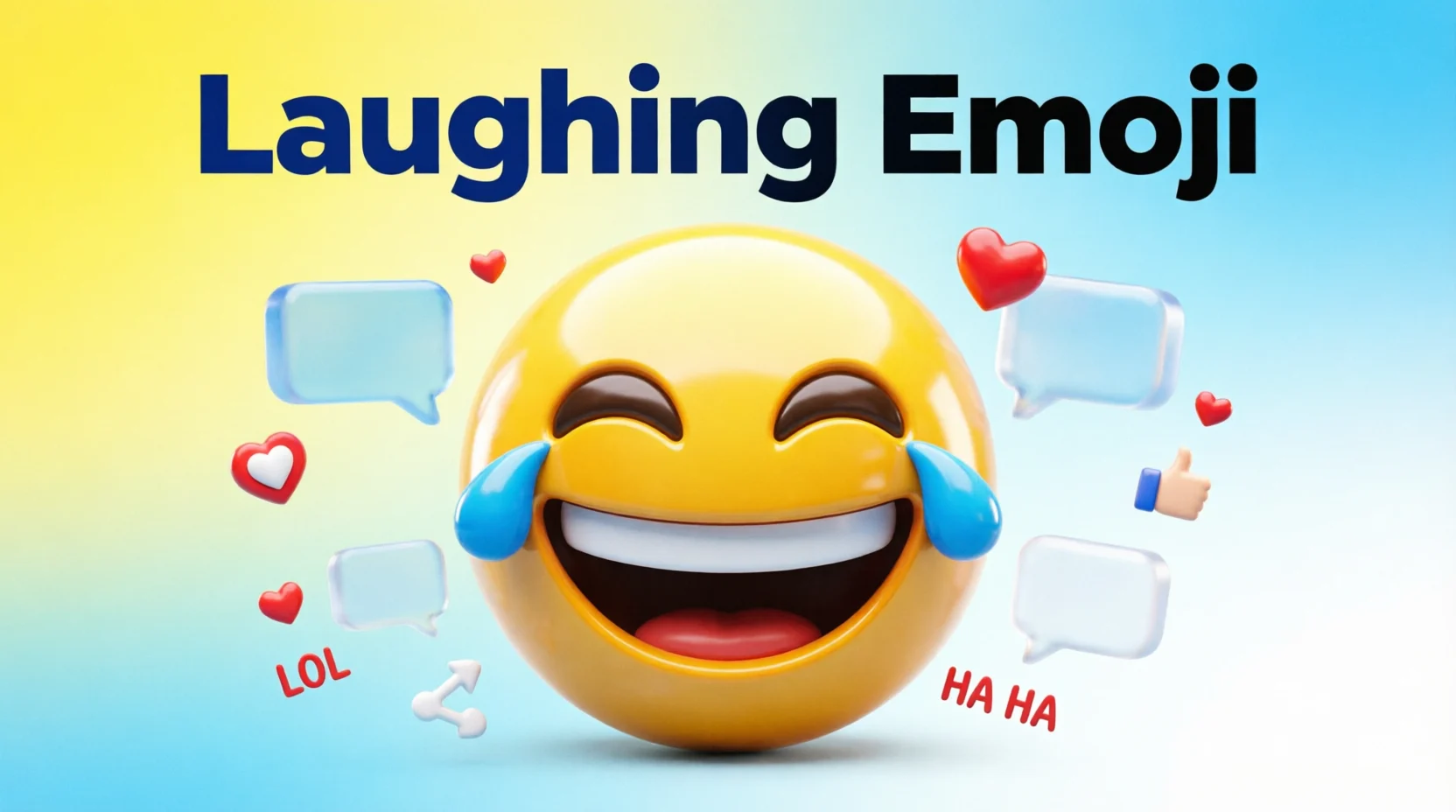
The laughing emoji 😂 is one of the most popular ways to show that something is extremely funny, hilarious, or amusing. It usually represents a person laughing so hard that tears come from their eyes.
People use it in text messages, social media comments, captions, chats, and online conversations to express strong amusement without writing a long response.
In simple terms, the laughing emoji means “That is really funny!” or “I’m laughing so hard!” However, its meaning can change depending on the conversation, relationship, and context. Sometimes it shows genuine laughter, while in other situations it can make a message feel playful, dramatic, or even sarcastic.
Quick Answer: What Does the Laughing Emoji 😂 Mean?
The laughing emoji 😂 means that something is very funny or has made you laugh. It is commonly used after a joke, funny story, meme, unexpected situation, or humorous comment. It can also be used to show that you are laughing at yourself or reacting playfully to something surprising.
For example:
Friend: I walked into the wrong classroom and sat there for ten minutes.
You: 😂😂😂
Here, the emoji clearly communicates that you find the situation funny.
What Is the Laughing Emoji?
The laughing emoji is commonly represented by 😂, officially known as Face with Tears of Joy. It shows a smiling face with tears coming from its eyes, suggesting laughter so intense that the person is crying with joy.
The emoji became especially popular in online communication because it provides an emotional response that plain text sometimes cannot express.
Instead of writing:
“That was extremely funny. I’m laughing so much right now.”
You can simply respond:
😂
This makes digital conversations faster, more expressive, and more natural.
What Does 😂 Mean in Texting?
In texting, 😂 generally means “I’m laughing,” “That’s hilarious,” or “You made me laugh.”
Its exact meaning depends on the message around it.
| Situation | Meaning of 😂 |
|---|---|
| Someone tells a joke | That is hilarious |
| A friend shares a funny story | I’m laughing at this |
| Someone makes a silly mistake | That is funny |
| You make fun of yourself | I can laugh at myself |
| Someone sends a meme | This is really funny |
| A surprising comment appears | I can’t believe you said that |
| A playful argument happens | I’m joking or teasing |
| An awkward situation occurs | This is funny in an awkward way |
The emoji can therefore communicate much more than simple laughter.
Why Do People Use the Laughing Emoji?
People use 😂 because online conversations do not include facial expressions, gestures, or tone of voice. A short sentence can sometimes sound serious even when the writer is joking.
For example:
“You are chaotic.”
Depending on the situation, this could sound insulting.
But:
“You are chaotic 😂”
usually feels more playful and friendly.
The emoji provides emotional context. It tells the reader that the statement may be humorous rather than hostile.
😂 vs. Other Laughing Emojis
Not every laughing emoji communicates exactly the same feeling. Choosing the right one can make your message sound more natural.
| Emoji | Common meaning | Typical feeling |
|---|---|---|
| 😂 | Laughing with tears | Very funny |
| 🤣 | Rolling on the floor laughing | Extremely hilarious |
| 😆 | Grinning and laughing | Strong amusement |
| 😹 | Cat laughing with tears | Funny and playful |
| 😭 | Crying dramatically | Can mean laughing extremely hard online |
| 😅 | Nervous or relieved laugh | Awkward, embarrassed, or relieved |
| 🤭 | Covering a laugh | Mischievous or quietly amused |
| 🙂 | Slight smile | Mildly positive or polite |
For a normal funny conversation, 😂 is one of the safest choices.
If something is unbelievably funny, 🤣 may communicate stronger laughter.
What Is the Difference Between 😂 and 🤣?
The laughing emoji 😂 and rolling-on-the-floor-laughing emoji 🤣 are closely related, but they can suggest different levels of amusement.
😂 usually means:
- That is really funny.
- I’m laughing.
- You made me laugh.
- That joke was great.
🤣 often feels stronger:
- I’m laughing uncontrollably.
- That is absolutely hilarious.
- I cannot stop laughing.
For example:
Friend: I accidentally called my teacher “Mom.”
You: 😂
For an even more exaggerated reaction:
You: 🤣🤣🤣
Both work, but 🤣 often adds extra intensity.
How to Use 😂 in a Conversation
Using the laughing emoji is simple, but placement can affect the tone.
After a Funny Joke
“Why did the chicken cross the road? 😂”
This shows that you found the joke amusing.
After a Funny Story
“You really forgot your own birthday? 😂”
Here, the emoji makes the response playful rather than harsh.
When Laughing at Yourself
“I spent ten minutes looking for my phone while holding it. 😂”
This is a natural way to show self-deprecating humor.
With Friends
“Bro, your message made my whole day 😂”
This creates a relaxed and friendly tone.
In Social Media Comments
“This is too funny 😂”
The emoji works naturally with short comments and reactions.
Can 😂 Be Used Sarcastically?
Yes. Like many emojis, 😂 can sometimes have a sarcastic meaning.
For example:
“Great, my internet stopped working during the exam 😂”
The person may not actually be laughing. Instead, they may be using the emoji to make an unpleasant situation sound humorous.
Another example:
“Amazing. I forgot my wallet again 😂”
Here, the emoji can communicate frustration mixed with humor.
Therefore, you should always consider the surrounding words before deciding what 😂 means.
Can 😂 Mean “I’m Embarrassed”?
Sometimes, yes.
People often use humor to respond to embarrassing situations.
For example:
“I waved back at someone who wasn’t waving at me 😂.”
The person is probably embarrassed but is making the situation funny.
In this context, 😂 can mean something close to:
“That was so embarrassing, but I have to laugh about it.”
Can 😂 Be Used in a Flirty Conversation?
Yes, but the meaning depends heavily on the conversation.
For example:
“You really think you can beat me at this game? 😂”
This can sound playful and teasing.
Another example:
“Okay, you’re actually funny 😂.”
Depending on the relationship, this might be friendly or slightly flirtatious.
However, 😂 alone does not automatically make a message romantic. The surrounding words and existing relationship matter much more.
Laughing Emoji Examples
Here are some natural examples you can copy or adapt.
Casual Examples
- That was actually hilarious 😂
- I can’t believe you did that 😂
- You’re too funny 😂
- Bro, what was that 😂
- I’m laughing so hard 😂
- That story gets funnier every time 😂
- No way you actually said that 😂
- This is exactly what I needed today 😂
Self-Joking Examples
- I woke up early and somehow still arrived late 😂
- I opened the fridge three times hoping new food would appear 😂
- I studied for five minutes and needed a break 😂
- I forgot why I walked into the room 😂
Social Media Examples
- This comment section is wild 😂
- The last part got me 😂
- I was not ready for that 😂
- This video is too funny 😂
- Who comes up with this stuff? 😂
How Many Laughing Emojis Should You Use?
There is no strict rule. One emoji can be enough, while several can make the reaction more dramatic.
One 😂
Use one when you simply want to show that something is funny.
“That was funny 😂”
Two or Three 😂
Use multiple emojis when something genuinely made you laugh.
“I cannot believe you did that 😂😂😂”
Many 😂 Emojis
A long chain can communicate exaggerated laughter:
“😂😂😂😂😂”
This is common among friends and on social media. However, using too many emojis can make professional or formal communication look immature.
When Should You Avoid the Laughing Emoji?
Although 😂 is useful in casual communication, it is not appropriate for every situation.
Serious Conversations
Avoid using 😂 when someone is discussing a serious personal problem unless they are clearly making a joke.
Professional Emails
A laughing emoji may be too casual in formal workplace communication.
Instead of:
“Thanks for fixing the issue 😂”
use:
“Thanks for fixing the issue.”
Sensitive Situations
Be careful when discussing accidents, illness, loss, conflict, or other sensitive subjects. Even if you intend to be lighthearted, the emoji can appear disrespectful.
With People You Do Not Know Well
If you are unsure how someone interprets emojis, start with simple and neutral language.
Common Mistakes When Using 😂
The laughing emoji is easy to use, but a few mistakes can create confusion.
Using It in a Serious Message
Adding 😂 to a serious statement can make your meaning unclear.
Using It After an Insult
“You look terrible today 😂”
Even if intended as a joke, the emoji does not guarantee that the other person will find it funny.
Assuming Everyone Interprets It the Same Way
People have different communication styles. One person may see 😂 as friendly, while another may consider it excessive or sarcastic.
Overusing It
Adding 😂 to every sentence can reduce its impact.
For example:
“Good morning 😂”
“What are you doing 😂”
“I’m eating 😂”
“Okay 😂”
Unless the conversation is intentionally playful, this may feel unnatural.
Laughing Emoji vs. “LOL”
The laughing emoji and LOL both communicate amusement, but they have slightly different styles.
LOL is a text abbreviation meaning “laughing out loud.” It is often used casually and can sometimes indicate mild amusement rather than actual laughter.
😂 is more visual and emotional.
Compare:
“That was funny lol.”
with:
“That was funny 😂.”
The second often feels more expressive.
You can also combine them:
“That was hilarious lol 😂.”
Practical Tips for Using 😂 Naturally
To make your messages feel natural, follow a few simple guidelines.
Match the conversation. Use 😂 when the conversation is already casual or humorous.
Consider the relationship. Friends may appreciate frequent emojis, while professional contacts may prefer fewer.
Use it to clarify humor. If a sentence could sound harsh, 😂 can sometimes signal playful intent.
Do not depend on emojis alone. Clear wording is still important.
Use different emojis for different emotions. 😂 means strong amusement, while 😅 can suggest awkwardness and 🤭 can suggest a hidden laugh.
Pay attention to the other person’s style. If someone rarely uses emojis, you may want to keep your own use moderate.
FAQs:
1. What does 😂 mean?
😂 usually means that something is very funny. It can communicate laughter, amusement, playful teasing, or a humorous reaction.
2. What is the official name of 😂?
The emoji is commonly known as Face with Tears of Joy. It represents intense laughter accompanied by tears of joy.
3. Is 😂 the same as LOL?
They have similar meanings, but they are not exactly the same. 😂 is a visual expression of strong amusement, while LOL is a text abbreviation that can range from mild amusement to genuine laughter.
4. What is the difference between 😂 and 🤣?
😂 generally expresses strong laughter, while 🤣 often suggests even more intense or uncontrollable laughter. Both are commonly used for very funny situations.
5. Can 😂 be sarcastic?
Yes. Depending on the context, 😂 can make a frustrating, awkward, or ironic situation sound humorous. The surrounding message determines the intended meaning.
6. Is it okay to use 😂 in professional messages?
Usually, it is better to avoid it in formal emails and serious workplace communication. In a relaxed workplace where emojis are common, it may be acceptable.
7. Can 😂 be used for flirting?
Yes, it can appear in playful or flirty conversations. However, 😂 itself is not a romantic emoji. The meaning comes mainly from the surrounding conversation.
8. Why do people use 😂 so often?
People use 😂 because it quickly communicates laughter and emotion. It also helps make casual digital conversations feel more expressive and friendly.
Conclusion
The laughing emoji 😂 is a simple but powerful way to express laughter, amusement, humor, and playful reactions online. It works especially well in text messages, social media comments, group chats, memes, and conversations with friends. Its meaning can range from “That’s funny” to “I’m laughing so hard,” depending on the situation.
The key is to use 😂 naturally and consider the context before sending it. Avoid it in serious or formal situations when it could be misunderstood, and remember that not everyone interprets emojis in exactly the same way. When used at the right moment, this small emoji can make digital conversations feel warmer, clearer, and much more fun.

I’m Aaron Thomas, a passionate writer who loves creating clever pickup lines, flirty messages, and fun conversation starters that help people connect, smile, and express confidence naturally.