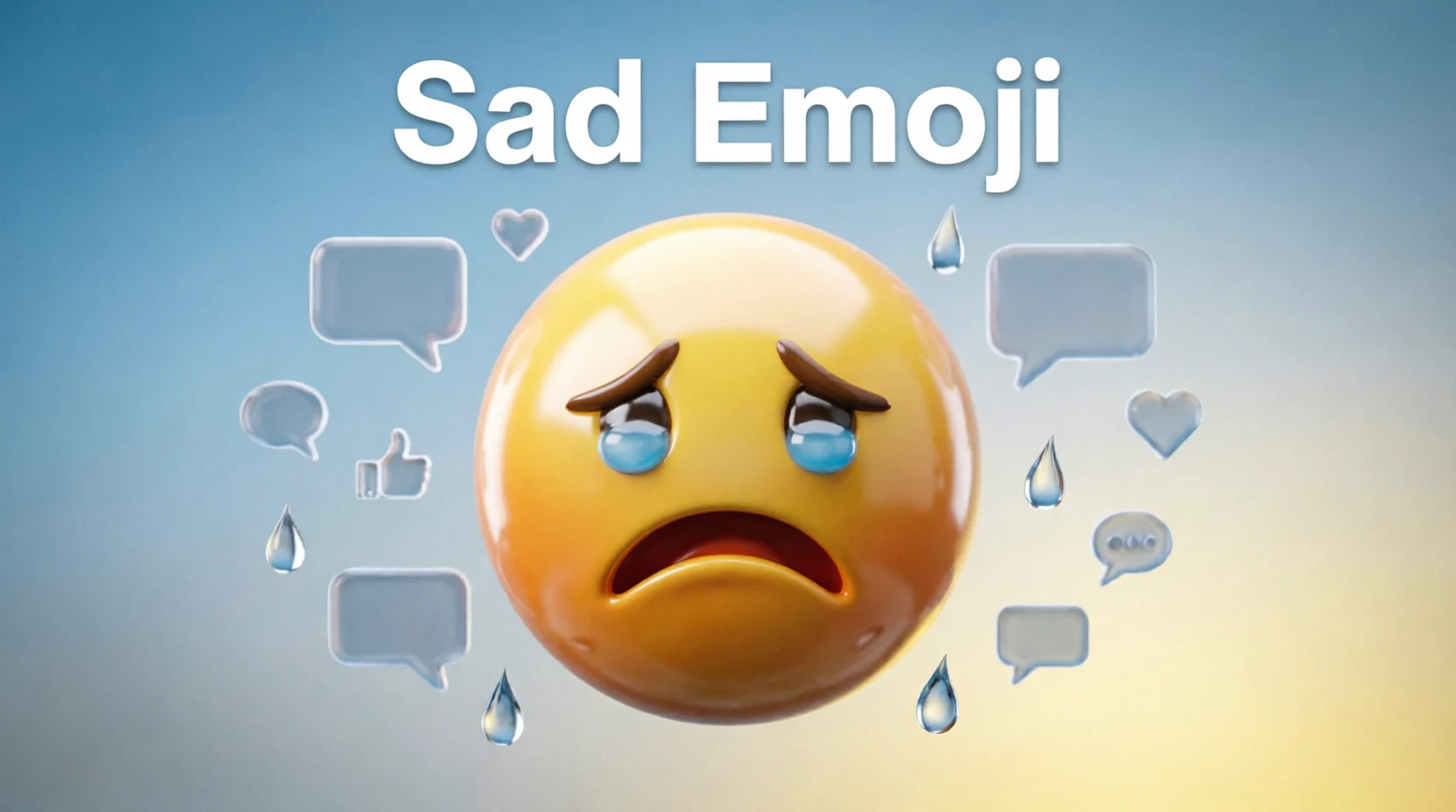
The sad emoji 😢 is one of the simplest ways to express sadness, disappointment, hurt, sympathy, or emotional vulnerability in a digital conversation. Instead of writing a long explanation, people can use a single emoji to show that something has affected them emotionally.
However, the meaning of a sad emoji can change depending on the situation, relationship, and message around it. For example, 😢 may show genuine sadness after bad news, while the same emoji can sometimes be used playfully when someone is pretending to be upset.
Understanding these small differences can help you communicate more clearly in texts, social media posts, comments, and online conversations.
Quick Answer: What Does the Sad Emoji 😢 Mean?
The sad emoji 😢 usually means sadness, emotional pain, disappointment, sympathy, or feeling hurt. It can be used when someone is crying or close to tears, has received disappointing news, misses someone, or wants to show emotional support. Its exact meaning depends on the surrounding conversation and context.
What Does the Sad Emoji 😢 Mean?
The 😢 emoji is commonly known as the Crying Face emoji. It shows a face with a single tear falling from one eye.
It generally communicates a noticeable but relatively simple emotional reaction. The person using it may feel sad, disappointed, touched, hurt, or sympathetic.
For example:
- “I really miss you 😢”
- “The movie ending was so sad 😢”
- “I didn’t get the job 😢”
- “I’m sorry to hear that 😢”
- “You are leaving already? 😢”
In each example, the emoji adds an emotional layer to the words.
The important point is that 😢 does not always mean serious crying. Sometimes it simply makes a statement sound more emotional.
When Should You Use the Sad Emoji?
There are many situations where 😢 feels natural. Here are some of the most common ones.
1. When You Feel Sad
Use 😢 when you genuinely want to tell someone that you are feeling unhappy.
Example:
“I’ve been thinking about everything today 😢”
2. When You Miss Someone
The emoji works especially well when talking about distance, separation, or memories.
Example:
“I wish you were here with me 😢”
3. When Something Disappoints You
You can use 😢 after receiving disappointing news.
Example:
“My favorite restaurant is closed today 😢”
4. When Showing Sympathy
Sometimes the sadness belongs to another person rather than you. In this case, 😢 can communicate compassion.
Example:
“That sounds really difficult. I’m sorry 😢”
5. When Reacting to a Sad Story
The emoji can show that something you read, watched, or heard affected you emotionally.
Example:
“That story broke my heart 😢”
6. When Saying Goodbye
A sad emoji can make a goodbye feel warmer and more emotional.
Example:
“Take care and see you soon 😢”
Sad Emoji Meaning in Different Contexts
The same emoji can communicate different emotions depending on where it appears.
| Context | Possible Meaning | Example |
|---|---|---|
| Personal chat | Genuine sadness | “I miss you 😢” |
| Friendship | Missing or feeling emotional | “You moved away 😢” |
| Relationship | Hurt or longing | “I wish things were different 😢” |
| Social media | Emotional reaction | “This story made me cry 😢” |
| Sympathy | Compassion | “I’m really sorry 😢” |
| Entertainment | Reaction to a sad scene | “That ending 😢” |
| Disappointment | Feeling let down | “They canceled the event 😢” |
| Playful conversation | Pretend sadness | “You didn’t save me any pizza 😢” |
Therefore, you should not interpret 😢 by itself. Always consider the message and the relationship between the people communicating.
Sad Emoji vs. Other Crying and Sad Emojis
Many emojis can express sadness, but they do not all have the same emotional intensity.
😢 Crying Face
This is a straightforward expression of sadness or emotional pain. The single tear often makes it feel softer than some stronger crying emojis.
😭 Loudly Crying Face
😭 usually represents much stronger emotion. It can mean intense sadness, overwhelming emotion, dramatic disappointment, or even laughing extremely hard in some online conversations.
😞 Disappointed Face
😞 focuses more on disappointment, discouragement, or feeling let down.
😔 Pensive Face
😔 often communicates quiet sadness, regret, reflection, or emotional heaviness.
☹️ Frowning Face
☹️ is a general expression of unhappiness or concern and can feel less emotional than 😢.
💔 Broken Heart
💔 is strongly associated with emotional heartbreak, especially in romantic or deeply personal situations.
🥺 Pleading Face
🥺 can express vulnerability, sadness, begging, affection, or wanting sympathy. Its meaning is more flexible than 😢.
Comparison Table
| Emoji | Main Feeling | Emotional Intensity |
|---|---|---|
| 😢 | Sadness or emotional pain | Medium |
| 😭 | Intense crying or emotion | High |
| 😞 | Disappointment | Medium |
| 😔 | Quiet sadness or regret | Medium |
| ☹️ | Unhappiness | Low to medium |
| 💔 | Heartbreak | High |
| 🥺 | Vulnerability or pleading | Medium |
How to Reply to Someone Who Sends 😢
Your response should depend on why the person sent it.
If they are genuinely upset, showing concern is usually better than immediately making a joke.
If You Want to Comfort Them
- “Are you okay? ❤️”
- “I’m here if you want to talk.”
- “I’m sorry you’re feeling this way.”
- “What happened?”
- “Don’t worry, you can talk to me.”
If They Miss You
You could respond warmly:
- “I miss you too 😢”
- “Hopefully we’ll see each other soon.”
- “Wish I could be there.”
If They Are Joking
If the conversation is clearly playful, a humorous response may work:
- “Oh no, not the sad face! 😂”
- “You’ll survive!”
- “Okay, okay, I’ll make it up to you.”
The key is to match the emotional tone instead of assuming every 😢 represents serious distress.
Sad Emoji Examples in Text Messages
Here are natural examples showing how people might use 😢.
After disappointing news:
“I didn’t get the opportunity I wanted 😢”
When missing a friend:
“Those old days were the best. I miss everyone 😢”
After saying goodbye:
“Have a safe journey. I’m going to miss you 😢”
Reacting to a movie:
“That final scene was heartbreaking 😢”
Showing sympathy:
“I’m really sorry you had to go through that 😢”
Feeling left out:
“Everyone went without me 😢”
Talking about memories:
“I still remember that day 😢”
Playful use:
“You ate the last piece without me 😢”
Can 😢 Be Used in a Romantic Conversation?
Yes. In romantic conversations, 😢 can communicate missing someone, emotional hurt, loneliness, or disappointment.
For example:
“I wish you were here tonight 😢”
This can suggest that the person misses their partner.
Similarly:
“You didn’t even say goodbye 😢”
may express emotional disappointment.
However, context matters. If a message sounds emotionally serious, it is better to respond thoughtfully rather than treating the emoji as a joke.
Sad Emoji on Social Media
On social media, 😢 can be used in captions, comments, replies, and reactions.
People may use it when discussing:
- Personal memories
- Missing someone
- Difficult experiences
- Emotional movies or songs
- Goodbyes
- Disappointing events
- News that makes them sad
- Nostalgic moments
- Emotional milestones
For example:
“Can’t believe this chapter is finally over 😢”
The emoji makes the caption feel more personal and emotional without requiring a long explanation.
Common Mistakes When Using 😢
Although the emoji is easy to understand, there are several situations where it can create confusion.
Using It Without Context
A single 😢 can be unclear. The recipient may wonder what happened.
Instead of sending only the emoji, consider adding a few words when the situation is important.
Better:
“I just heard the news 😢”
Using It During a Serious Situation Without Words
If someone is dealing with a major personal problem, an emoji alone may seem insufficient.
A short supportive message is usually more appropriate.
Better:
“I’m really sorry. I’m here for you 😢”
Overusing It
Using 😢 in every message can reduce its emotional effect.
For example, adding it to ordinary statements such as “I had breakfast 😢” may confuse the reader unless you are intentionally being humorous.
Assuming Everyone Interprets It the Same Way
Emoji meanings can vary between people, cultures, age groups, and online communities. Someone may use 😢 sincerely, while another person may use it dramatically or jokingly.
Practical Tips for Using the Sad Emoji
A few simple guidelines can make your messages clearer.
Use it naturally. Don’t add 😢 just because you think an emotional message needs an emoji.
Consider the relationship. A sad emoji between close friends may feel completely normal, while the same emoji in a formal conversation may be inappropriate.
Read the surrounding words. The sentence usually tells you more than the emoji alone.
Match the emotional intensity. Use 😢 for ordinary sadness or emotional reactions, while stronger emojis may be more suitable for intense situations.
Add words when necessary. If someone is genuinely hurting, a supportive sentence is more meaningful than an emoji by itself.
Remember the tone. Emojis can soften a message, add emotion, or make a statement playful.
FAQs:
1. What does 😢 mean from a girl?
😢 generally means sadness, disappointment, hurt, missing someone, or sympathy. It does not automatically indicate romantic feelings. The surrounding conversation is important for understanding her intended meaning.
2. What does 😢 mean from a guy?
A guy may use 😢 to show sadness, disappointment, sympathy, emotional vulnerability, or playful frustration. The emoji itself does not have a gender-specific meaning.
3. Is 😢 a sad emoji?
Yes. 😢 is commonly used as a sad or crying emoji. It typically represents sadness, emotional pain, disappointment, or sympathy.
4. What is the difference between 😢 and 😭?
😢 usually represents moderate sadness or emotion, while 😭 often communicates much stronger crying or an exaggerated emotional reaction. However, online usage can vary.
5. Can 😢 mean “I miss you”?
Yes. When someone sends 😢 alongside a message about distance, memories, or separation, it can reinforce the feeling of missing someone.
6. Does 😢 always mean someone is actually crying?
No. Someone may use 😢 to express mild sadness, disappointment, sympathy, nostalgia, or even playful pretend sadness. It does not necessarily mean they are literally crying.
7. What does 😢 mean in a relationship?
In a relationship, 😢 can express missing a partner, feeling hurt, disappointment, loneliness, or emotional vulnerability. The exact meaning depends on the conversation.
8. How should I respond to 😢?
If the person appears genuinely sad, respond with empathy. You can ask what happened, offer support, or simply say that you are there for them. If the conversation is clearly playful, a lighthearted response may be appropriate.
Conclusion
The sad emoji 😢 is a simple but powerful way to add emotion to digital communication. It can represent sadness, disappointment, sympathy, missing someone, emotional vulnerability, or even playful frustration. Because emojis depend heavily on context, the words surrounding 😢 are often the best clue to its intended meaning.
If you are texting a friend, responding to a social media post, comforting someone, or expressing your own feelings, use 😢 in a way that matches the situation. When emotions are serious, combine the emoji with genuine words of support so your message feels clear, thoughtful, and sincere.

I create fun, creative pickup lines and flirty messages that help people feel confident, spark conversations, and make their chats more playful, memorable, and enjoyable.