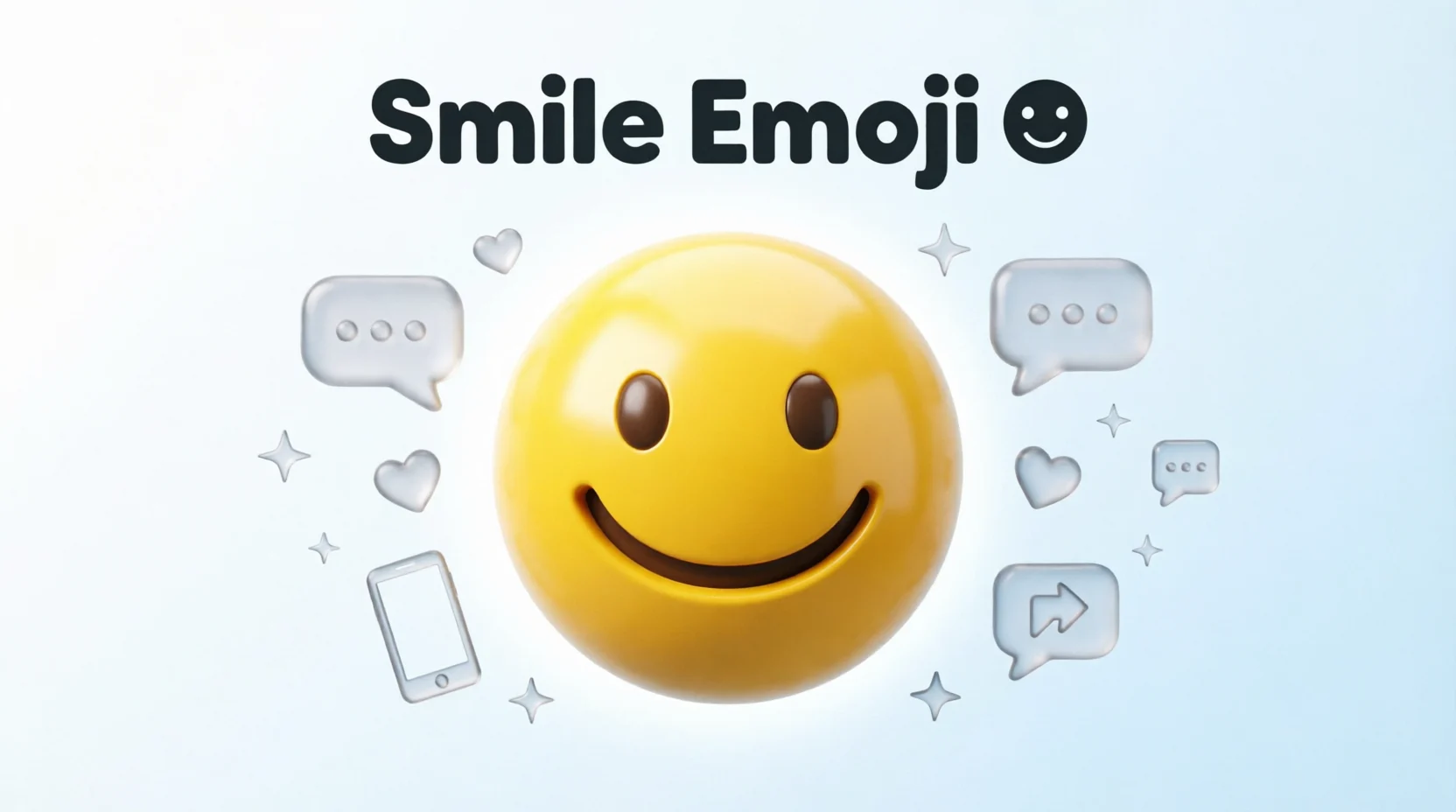
The smile emoji 😊 usually expresses warmth, friendliness, happiness, kindness, or gentle positivity. It can make a message feel more welcoming and show that you are pleased, grateful, or comfortable with someone.
Unlike the simple grinning emoji 😀, the smile emoji often feels softer and more personal. Its meaning depends on the conversation, the relationship between people, and the words surrounding it. In some situations, 😊 can also suggest shyness, politeness, awkwardness, or a hidden feeling.
Quick Answer: What Does the Smile Emoji 😊 Mean?
The smile emoji 😊 represents a warm, gentle smile. People use it to show happiness, friendliness, gratitude, affection, politeness, or appreciation. It can make a text sound softer and more positive.
For example:
- Thank you for helping me 😊
- I’m happy to see you 😊
- Have a beautiful day 😊
- You’re really kind 😊
The emoji is generally positive, but its exact meaning depends on the message and context.
What Is the Smile Emoji 😊?
The smile emoji is a yellow face with smiling eyes and a small, closed-mouth smile. It is officially known as the Smiling Face with Smiling Eyes. It is commonly used in everyday digital communication, including text messages, social media comments, emails, and online chats.
Unlike emojis with big open-mouth smiles, 😊 has a calm and gentle appearance. It does not usually express loud excitement or uncontrollable laughter. Instead, it communicates a quiet, pleasant emotion.
People may use it when they want to:
- Show kindness
- Express genuine happiness
- Make a message sound friendly
- Say thank you warmly
- Respond to a compliment
- Show appreciation
- Add a soft emotional touch
- Make a conversation less formal
For example, compare these two messages:
Thank you.
Thank you 😊
The first message is simple and neutral. The second one may feel warmer, friendlier, and more appreciative.
However, the emoji does not automatically make every message sincere. The surrounding words and the relationship between the people still matter.
Smile Emoji 😊 Meaning in Different Situations
The meaning of 😊 can change depending on the situation. The same emoji may express happiness in one conversation and polite awkwardness in another.
1. Happiness and Contentment
One of the most common meanings of 😊 is simple happiness. Someone may use it when they feel good, peaceful, or satisfied.
Examples:
- Today was such a lovely day 😊
- I finally finished my work 😊
- I’m feeling much better now 😊
- Everything is going well 😊
In these examples, the emoji adds a calm and positive feeling.
2. Kindness and Friendliness
People often use 😊 to sound approachable and welcoming. It can make a short reply feel more caring.
Examples:
- Nice to meet you 😊
- Welcome to the group 😊
- Hope you have a great day 😊
- It was lovely talking to you 😊
This use is especially common in friendly conversations and online communities.
3. Gratitude and Appreciation
The smile emoji can show that someone appreciates another person’s help, kindness, or effort.
Examples:
- Thanks for checking on me 😊
- I really appreciate your support 😊
- Thank you for the thoughtful gift 😊
- You made my day 😊
Here, 😊 adds warmth to the expression of gratitude.
4. Shyness or Gentle Affection
Sometimes, the emoji expresses a shy smile or a soft emotional reaction. A person might use it after receiving a compliment or talking to someone they like.
Examples:
- You’re so sweet 😊
- That’s really nice of you 😊
- I’m glad you remembered 😊
- You always make me smile 😊
In a romantic conversation, 😊 may suggest affection or mild flirtation. However, it does not always mean romantic interest.
5. Politeness
People sometimes use 😊 to make a request or correction sound less harsh.
Examples:
- Could you send the file again, please? 😊
- Please remember to call me when you arrive 😊
- I think there may be a small mistake 😊
- Let me know if you need anything 😊
The emoji can soften the tone, but it cannot replace respectful wording.
6. Awkwardness or Nervousness
In certain conversations, 😊 can represent an uncomfortable or slightly nervous smile. This interpretation is more likely when the message discusses an embarrassing moment, difficult situation, or unexpected comment.
Examples:
- I forgot the meeting again 😊
- Well, that was embarrassing 😊
- I don’t really know what to say 😊
- I guess I made things awkward 😊
This use depends heavily on context. The emoji itself is not inherently negative.
Smile Emoji 😊 vs. Other Smiling Emojis
Many smile-related emojis look similar, but they communicate different emotional tones. Choosing the right one can help you express yourself more clearly.
|
Emoji
|
Common meaning
|
Emotional tone
|
| — | — | — |
|
😊
|
Warm smile, kindness, gentle happiness
|
Soft and friendly
|
|
🙂
|
Slight smile, simple positivity
|
Neutral or calm
|
|
😀
|
Broad, open-mouth smile
|
Cheerful and excited
|
|
😄
|
Happy face with smiling eyes
|
Joyful and energetic
|
|
😁
|
Big grin with visible teeth
|
Excited or playful
|
|
😌
|
Relieved or peaceful face
|
Calm and relaxed
|
|
☺️
|
Smiling face with a gentle appearance
|
Sweet, warm, or affectionate
|
|
😅
|
Smile with sweat
|
Nervousness, relief, or awkward humor
|
|
😏
|
Smirking face
|
Confidence, teasing, or suggestiveness
|
|
🤗
|
Hugging face
|
Warmth, support, or affection
|
😊 vs. 🙂
The smile emoji 😊 usually feels more emotionally warm than 🙂. The latter can be a simple, neutral smile, while 😊 often suggests genuine friendliness or appreciation.
Example:
- Okay 🙂
- Okay 😊
The first may sound brief or neutral. The second may sound more welcoming, depending on the conversation.
😊 vs. 😄
The 😄 emoji generally expresses stronger happiness or excitement. By contrast, 😊 communicates a quieter, gentler smile.
Examples:
- I got the job 😄 — strong excitement.
- I’m glad everything worked out 😊 — warm satisfaction.
😊 vs. 😌
The 😌 emoji often suggests peace, relief, or relaxation. The 😊 emoji is more commonly associated with friendliness and happiness.
Examples:
- I’m finally home 😌 — relief or relaxation.
- It was great seeing you 😊 — warmth and friendliness.
😊 vs. 😏
These emojis can communicate very different feelings. 😊 usually has a sincere, gentle appearance, while 😏 may suggest teasing, confidence, irony, or flirtation.
For professional and polite conversations, 😊 is generally less suggestive than 😏.
How to Use the Smile Emoji 😊 in Text Messages
The smile emoji works well in many everyday conversations. The best way to use it is to match the emoji with the feeling you want to communicate.
In Friendly Conversations
Use 😊 when greeting friends, responding warmly, or showing appreciation.
- Good morning! Hope you slept well 😊
- That sounds like a great plan 😊
- I’m happy we got to talk today 😊
- See you tomorrow 😊
In Romantic Conversations
In romantic chats, 😊 may express affection, sweetness, or a little shyness. It can make a message feel gentle without being overly direct.
- I was thinking about you 😊
- You always make me happy 😊
- I loved spending time with you 😊
- Can’t wait to see you again 😊
Remember that one emoji cannot confirm whether someone has romantic feelings. Look at their overall communication and behavior.
In Family Conversations
The emoji can add warmth to messages sent to parents, siblings, cousins, or other relatives.
- Thank you for everything, Mom 😊
- Take care of yourself 😊
- I’m glad you reached home safely 😊
- Love you all 😊
In Professional Messages
😊 can be suitable in informal workplaces, friendly team chats, or casual communication with familiar colleagues. However, its appropriateness depends on the company culture and the people involved.
Examples:
- Thanks for the update 😊
- I appreciate your help with this task.
- Have a good weekend 😊
For formal business emails, a clear and professional sentence may be more appropriate than an emoji.
Smile Emoji 😊 in Social Media Comments
The smile emoji is frequently used in social media comments to express support, appreciation, and friendliness. It can make a short comment feel more positive.
Comment Examples
- Such a beautiful picture 😊
- This made me smile 😊
- Looking great 😊
- What a lovely memory 😊
- So happy for you 😊
- Wishing you all the best 😊
- This is really sweet 😊
- Beautiful vibes 😊
The emoji is especially useful when you want to leave a kind comment without writing a long sentence.
Smile Emoji 😊 in Different Relationships
The same emoji may have different meanings depending on who sends it.
|
Relationship
|
Possible meaning of 😊
|
Example
|
| — | — | — |
|
Close friend
|
Warmth, happiness, appreciation
|
Thanks for being there 😊
|
|
Family member
|
Love, kindness, comfort
|
Take care, Dad 😊
|
|
Romantic partner
|
Affection, sweetness, gentle happiness
|
Miss you 😊
|
|
New acquaintance
|
Friendliness, politeness
|
Nice meeting you 😊
|
|
Coworker
|
Appreciation or casual friendliness
|
Thanks for your help 😊
|
|
Teacher or professional
|
Polite warmth, depending on context
|
Thank you for explaining 😊
|
|
Stranger online
|
Kindness or a welcoming tone
|
Hope you have a great day 😊
|
The meaning becomes clearer when you consider the complete conversation rather than focusing on the emoji alone.
Does 😊 Mean Someone Likes You?
The smile emoji 😊 can sometimes appear in conversations between people who like each other. It may express affection, shyness, or happiness during a friendly or romantic exchange.
However, 😊 alone does not prove that someone has romantic feelings. Many people use it with friends, relatives, coworkers, and strangers.
To understand the message better, consider:
- What did the person say before sending the emoji?
- Do they regularly communicate with you?
- Is their overall tone warm or formal?
- Are they responding to a compliment or a personal message?
- Do they use the same emoji with everyone?
- Is the conversation clearly romantic, friendly, or professional?
For example:
You looked great today 😊
This could be a friendly compliment or a romantic expression. The emoji does not provide enough information to determine the sender’s intentions.
Common Misunderstandings About 😊
Although 😊 is generally positive, people sometimes interpret it differently.
Misunderstanding 1: It Always Means Romantic Interest
Not necessarily. 😊 is widely used in ordinary friendly conversations. A friend saying “Thank you 😊” may simply be expressing appreciation.
Misunderstanding 2: It Always Means Genuine Happiness
The emoji often expresses happiness, but it can also be used for politeness, nervousness, or awkwardness. Context is important.
Misunderstanding 3: It Has the Same Meaning as 😀
Both emojis communicate positivity, but their emotional intensity may differ. 😀 often appears more energetic, while 😊 usually feels softer.
Misunderstanding 4: It Is Always Appropriate in Professional Communication
Not every workplace welcomes emojis. In a formal email, a smile emoji may seem too casual. Consider the relationship, purpose, and communication style before using it.
Misunderstanding 5: Everyone Interprets It in the Same Way
People have different communication habits. Some use 😊 frequently, while others use it only when they feel especially warm or appreciative.
Common Mistakes When Using 😊
Using emojis effectively is mostly about timing, tone, and context. Avoid these common mistakes.
Using Too Many Smile Emojis
A message containing many repeated emojis can look excessive or less natural.
Less natural:
Thank you 😊😊😊😊😊😊
More natural:
Thank you so much 😊
Adding It to Serious Messages
A smile emoji may be confusing when discussing grief, conflict, or an important problem.
For example, sending “I’m sorry for your loss 😊” may unintentionally create an inappropriate tone. A sincere, simple message is often better.
Using It to Hide an Unclear Message
An emoji cannot fix a rude or confusing sentence. If you need to apologize, explain something, or make a request, use clear and respectful words first.
Assuming It Communicates a Specific Emotion
Do not automatically assume that 😊 means love, sarcasm, embarrassment, or happiness. The surrounding message provides the necessary context.
Practical Tips for Using 😊 Naturally
Here are some easy ways to use the smile emoji effectively.
- Match the emotion. Use 😊 when you want to express warmth, kindness, or gentle happiness.
- Consider the relationship. A close friend may appreciate casual emoji use, while a formal contact may prefer plain text.
- Read the conversation. Look at the words before and after the emoji.
- Avoid overusing it. One well-placed emoji is often enough.
- Use clear words. Let the message communicate the main meaning.
- Think about seriousness. Avoid using a cheerful emoji when the topic requires sympathy or formality.
- Respect personal preferences. Some people enjoy emojis, while others rarely use them.
- Consider cultural differences. Emoji interpretations can vary across age groups, regions, and online communities.
Smile Emoji 😊 Copy-and-Paste Examples
You can use these messages in everyday chats, captions, or comments.
Friendly Messages
- Have a wonderful day 😊
- It was nice talking to you 😊
- I’m happy you’re here 😊
- Thanks for making me smile 😊
- Hope everything goes well 😊
Sweet Messages
- You’re such a kind person 😊
- You always brighten my day 😊
- That means a lot to me 😊
- I’m lucky to know you 😊
- Sending you good vibes 😊
Thank-You Messages
- Thank you so much 😊
- I really appreciate your help 😊
- Thanks for remembering me 😊
- You’re very thoughtful 😊
- I’m grateful for your kindness 😊
Short Social Media Comments
- So lovely 😊
- Beautiful moment 😊
- This is amazing 😊
- Such a sweet post 😊
- Keep smiling 😊
FAQs:
1. What does 😊 mean from a girl?
When a girl sends 😊, it may mean she feels happy, friendly, appreciative, shy, or comfortable in the conversation. It does not automatically indicate romantic interest. The meaning depends on her words, the situation, and her usual communication style.
2. What does 😊 mean from a boy?
A boy may use 😊 to express friendliness, kindness, gratitude, happiness, or affection. It can appear in both casual and romantic conversations. The emoji alone cannot tell you exactly what he feels.
3. Is 😊 a flirty emoji?
😊 can be used in a flirtatious conversation, especially when someone is being sweet or shy. However, it is not exclusively a flirting emoji. Many people use it with friends, family, and coworkers.
4. What is the difference between 😊 and 🙂?
😊 usually conveys a warmer, more personal smile, while 🙂 can feel simpler, calmer, or more neutral. Both are positive emojis, but their emotional tone may differ depending on the conversation.
5. Can 😊 mean sarcasm?
Yes, it can sometimes be used sarcastically, especially after an awkward, ironic, or uncomfortable statement. However, sarcasm is not the emoji’s primary meaning. The surrounding words are more important.
6. Is 😊 appropriate for work messages?
It can be appropriate in casual workplace chats or friendly communication, depending on the company culture. In formal emails, official announcements, or serious discussions, plain professional language may be more suitable.
7. What does 😊 mean in a text from someone you like?
It may suggest warmth, happiness, shyness, or affection. However, it does not confirm romantic feelings. Consider the complete conversation and the person’s communication habits before interpreting it.
8. What is the official name of 😊?
The official Unicode name is Smiling Face with Smiling Eyes. It is commonly called the smile emoji, smiling face emoji, or warm smile emoji.
Conclusion
The smile emoji 😊 is a gentle way to express happiness, friendliness, kindness, gratitude, and warmth in digital conversations. It can make a message feel more welcoming and add a soft emotional touch to everyday communication. If you use it with friends, family, coworkers, or someone special, the meaning depends on the words and situation.
Use 😊 naturally, pay attention to the tone of the conversation, and avoid assuming that it always represents romantic feelings or genuine happiness. When paired with clear and thoughtful words, this simple emoji can help your messages feel more positive, personal, and friendly.

I’m Connor James, an administrator at FlirtyLinz, passionate about pickup lines, playful conversations, dating, and helping readers find fun, confident, and creative ways to start conversations.