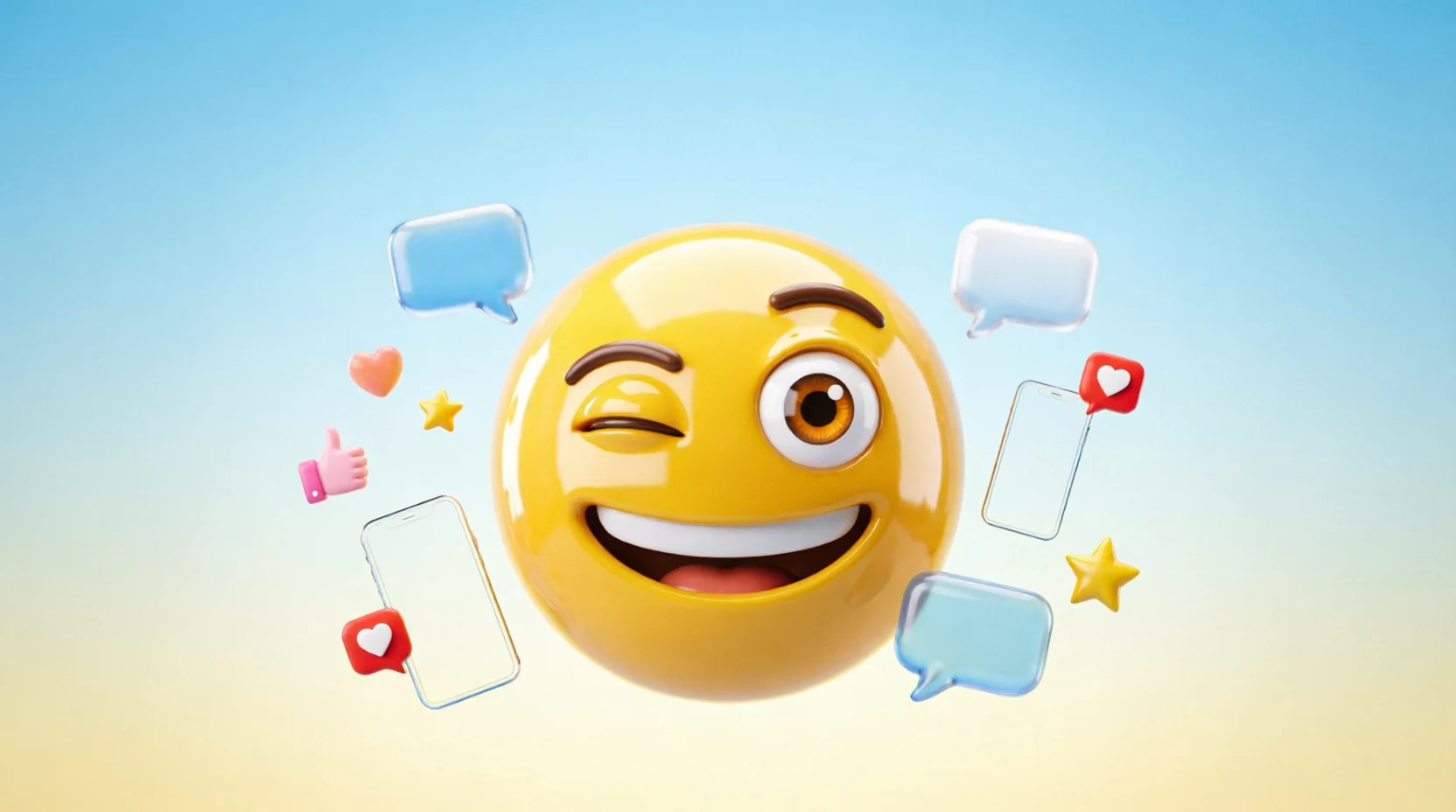
The wink emoji 😉 usually adds a playful, teasing, friendly, or slightly flirty tone to a message. It can show that you are joking, being clever, hinting at something, or sharing an inside meaning. However, its exact meaning depends heavily on the conversation, relationship, and words around it.
A simple “Okay 😉” can feel completely different from “You looked great today 😉.” Understanding the context helps you use the wink emoji naturally without sending the wrong message.
Quick Answer: What Does the Wink Emoji 😉 Mean?
The wink emoji 😉 commonly means “I’m joking,” “I’m teasing,” “you know what I mean,” or “there’s a playful hidden meaning here.” It can also express friendliness or flirting. Unlike a normal smile, the wink often suggests that the sender wants you to notice an extra layer of meaning.
For example:
- “Sure, I’ll keep your secret 😉” = playful or knowing
- “You look amazing tonight 😉” = possibly flirty
- “I totally finished my homework 😉” = joking or sarcastic
- “See you tomorrow 😉” = friendly, teasing, or suggestive depending on context
What Does the Wink Emoji 😉 Mean?
The wink emoji is a yellow face with one eye closed and the other open, usually accompanied by a slight smile. It represents a physical wink, but in digital communication, it can carry several different meanings.
1. Playfulness
One of the most common uses is to make a message feel lighter and more playful.
Example:
“Looks like you finally learned how to cook 😉”
The sender may not be seriously criticizing you. The wink makes the statement feel teasing rather than harsh.
2. Joking
The emoji can tell the reader that a statement should not be taken completely seriously.
Example:
“I’m definitely the best singer in this group 😉”
Here, the wink suggests confidence mixed with humor.
3. Flirting
A wink can sometimes make a message feel romantic or flirtatious.
Example:
“Maybe we should have dinner together sometime 😉”
The words are relatively innocent, but the wink adds a possible romantic undertone.
4. A Hidden Hint
Sometimes the wink means, “There is more to this than I am saying.”
Example:
“I might have a surprise for you 😉”
The sender is intentionally creating curiosity.
5. Friendly Understanding
Friends may use the emoji to show that they understand an inside joke or shared situation.
Example:
“Don’t worry, I know what happened 😉”
The wink can communicate shared knowledge without explaining everything.
Why Does Context Matter So Much?
The wink emoji does not have one fixed meaning. The same emoji can communicate completely different emotions depending on the words surrounding it.
Consider this sentence:
“Good job 😉”
It could mean:
- Genuine encouragement
- Friendly teasing
- Sarcasm
- Flirting
- An inside joke
The relationship between the people also matters. A wink from a close friend may feel completely normal, while the same wink from a stranger could seem flirtatious or confusing.
The safest approach is to read the whole message, not the emoji alone.
Wink Emoji Meaning in Different Situations
| Situation | Possible Meaning | Example |
|---|---|---|
| Friends | Teasing or joking | “Nice haircut 😉” |
| Romantic conversation | Flirting | “Wish you were here 😉” |
| Family | Playfulness | “I didn’t eat the last cookie 😉” |
| Workplace | Light humor | “I’ll get it done 😉” |
| Online comments | Playful reaction | “Someone is feeling confident 😉” |
| Private messages | Hint or teasing | “Wait until you see it 😉” |
| Sarcastic conversation | Not completely serious | “Of course I planned everything perfectly 😉” |
Because digital communication lacks facial expressions and vocal tone, emojis often help provide emotional context.
Is the Wink Emoji Flirty?
Sometimes, yes, but not always.
The wink emoji is frequently associated with flirting because a physical wink can be playful or suggestive. However, using 😉 does not automatically mean someone is romantically interested.
Compare these examples:
Clearly playful:
“You really thought you could beat me at chess? 😉”
Potentially flirty:
“You looked really good today 😉”
More suggestive:
“Maybe I’ll show you what I mean later 😉”
The surrounding words, relationship, and conversation history determine the likely interpretation.
If someone repeatedly uses 😉 while complimenting you, teasing you, or suggesting spending time together, the overall conversation may have a flirtatious tone. Still, an emoji alone is not reliable proof of romantic interest.
Wink Emoji vs. Other Similar Emojis
Several emojis can express friendliness, humor, or affection, but they create different impressions.
| Emoji | Common Feeling | Typical Use |
|---|---|---|
| 😉 | Playful, teasing, hinting | “You know what I mean 😉” |
| 🙂 | Calm, friendly | “Nice to meet you 🙂” |
| 😊 | Warm, happy | “Thank you so much 😊” |
| 😏 | Smug, suggestive, confident | “I already knew that 😏” |
| 😜 | Silly, joking | “I’m totally innocent 😜” |
| 😄 | Cheerful | “That was hilarious 😄” |
| 😘 | Affectionate or romantic | “Goodnight 😘” |
| 🤭 | Embarrassed, amused, secretive | “I probably shouldn’t say this 🤭” |
The 😉 wink usually sits somewhere between ordinary friendliness and stronger flirtation. That flexibility is one reason it is so popular.
Wink Emoji 😉 vs. Smirking Face 😏
These two emojis are often confused, but they usually create different impressions.
The wink emoji 😉 tends to feel lighter, friendlier, and more playful.
The smirking face 😏 can feel more confident, suggestive, smug, or intentionally provocative.
For example:
“You know I’m right 😉”
This can sound playful.
“You know I’m right 😏”
This may sound more self-satisfied or suggestive.
If you want to tease someone without sounding too intense, 😉 is generally the softer choice.
Wink Emoji 😉 in Texting
The wink emoji works especially well in casual texting because it can change the emotional tone of a short sentence.
“Okay 😉”
Depending on context, this could mean:
- “Sure, sounds good.”
- “Okay, I know what you’re doing.”
- “Okay, but I’m teasing you.”
- “Okay, I’m interested.”
“Really? 😉”
This can suggest playful disbelief or curiosity.
“I’ll think about it 😉”
This might mean the sender is genuinely considering something, or they are teasing about already having an answer.
“See you later 😉”
With friends, it may simply be playful. In a romantic conversation, it could sound more flirtatious.
How to Use the Wink Emoji Naturally
Using 😉 effectively is mostly about matching it to the tone of the conversation.
Use It After a Joke
If you make a playful statement, a wink can help the reader understand that you are not being completely serious.
Example:
“You definitely owe me pizza for that 😉”
Use It With Light Teasing
Example:
“You finally replied after three business days 😉”
The emoji softens the teasing and makes the message feel less aggressive.
Use It for a Playful Hint
Example:
“I might have something planned for Saturday 😉”
This creates curiosity without explaining everything.
Use It in Friendly Banter
Example:
“Enjoy your victory while it lasts 😉”
This works well between friends or competitors.
When Should You Avoid the Wink Emoji?
Although the wink can be useful, it is not appropriate for every situation.
Avoid using it when discussing serious matters, especially when the other person may interpret your message as dismissive.
For example:
“I’m sorry about what happened 😉”
The wink could make the message appear insensitive or sarcastic.
It can also be risky in professional communication. A casual workplace conversation may allow playful emojis, but a formal complaint, serious request, or sensitive discussion usually calls for clearer language.
Situations Where Caution Helps
- Serious apologies
- Arguments
- Sensitive personal conversations
- Formal business emails
- Conversations with people you barely know
- Messages involving serious problems
- Situations where sarcasm could be misunderstood
When clarity matters more than playfulness, words are usually better than an emoji.
Common Misunderstandings About the Wink Emoji
Misunderstanding 1: “It Always Means Flirting”
Not necessarily. Friends, siblings, coworkers, and strangers can all use 😉 in playful conversations.
Misunderstanding 2: “It Always Means Sarcasm”
Again, no. Sarcasm is one possible interpretation, but the emoji can simply communicate friendliness or humor.
Misunderstanding 3: “One Wink Proves Someone Likes You”
A single emoji cannot reliably establish romantic interest. Look at the broader conversation and behavior instead.
Misunderstanding 4: “It Means the Same Thing Everywhere”
Emoji interpretation can vary between people, age groups, cultures, platforms, and personal texting habits.
Misunderstanding 5: “It Is the Same as 😏”
The two emojis can overlap, but 😉 generally feels more playful, while 😏 can carry a stronger smug or suggestive tone.
Examples of Wink Emoji Messages
Here are some natural examples for different situations.
Friendly
- “You better save me some cake 😉”
- “I know what you did there 😉”
- “Don’t forget our plan 😉”
- “You’re getting competitive again 😉”
Funny
- “I totally didn’t eat the last slice 😉”
- “Of course I read the instructions 😉”
- “I never make mistakes 😉”
- “I’m definitely going to sleep early tonight 😉”
Flirty
- “Maybe you can convince me 😉”
- “You looked pretty good today 😉”
- “I wouldn’t mind seeing you again 😉”
- “Maybe I’ll tell you when we meet 😉”
Teasing
- “You really thought you could win? 😉”
- “Someone is feeling confident today 😉”
- “Took you long enough 😉”
- “I’ll let you believe that 😉”
How to Reply to a Wink Emoji
Your response should depend on the tone you want to create.
If You Want to Stay Playful
Try:
- “What are you plotting? 😂”
- “I see that wink 😉”
- “Oh, I know that look.”
- “Should I be worried? 😂”
If You Think They Are Flirting
You can respond playfully without assuming too much:
- “Is that a flirty wink? 👀”
- “What exactly does that wink mean? 😉”
- “Now you’ve got my attention.”
- “Interesting choice of emoji 😉”
If You Are Unsure
A simple response can keep the conversation comfortable:
“Haha, what do you mean? 😄”
This gives the other person a chance to explain their intention.
Practical Tips for Using 😉
Keep the following tips in mind:
- Match the conversation. Use 😉 when the conversation is already casual or playful.
- Consider your relationship. A wink can feel different between close friends and strangers.
- Do not rely on it for serious communication. Say what you actually mean when clarity matters.
- Watch the surrounding words. The sentence often determines the emoji’s real tone.
- Avoid overusing it. Several winks in every message can make your texts feel forced.
- Know your audience. Not everyone interprets emojis in exactly the same way.
- Use it to soften teasing. It can make playful criticism feel less harsh.
- Do not assume romance. A wink can be friendly, humorous, sarcastic, or flirtatious.
FAQs:
1. What does 😉 mean from a girl?
It can mean joking, teasing, friendliness, flirting, or a hidden hint. The meaning depends on her message and the overall relationship rather than the emoji alone.
2. What does 😉 mean from a guy?
A guy may use 😉 to joke, tease, flirt, show confidence, or suggest that a message has another meaning. Context is important.
3. Is the wink emoji considered flirty?
It can be flirty, especially when combined with compliments, romantic comments, or suggestive wording. However, it is also commonly used between friends for humor and teasing.
4. What does “okay 😉” mean?
“Okay 😉” can suggest playful agreement, teasing, a hidden meaning, or possible flirtation. The conversation before and after the message usually provides the best clue.
5. What is the difference between 😉 and 😏?
😉 generally feels playful, friendly, or teasing, while 😏 often sounds more smug, confident, or suggestive.
6. Can I use 😉 in professional messages?
It depends on the workplace and relationship. It may be acceptable in a very casual team conversation, but it is safer to avoid it in formal, sensitive, or serious professional communication.
7. What does a wink emoji mean after a compliment?
It may make the compliment more playful or flirtatious. For example, “You look great 😉” can sound more suggestive than “You look great 😊.”
8. How should I respond to 😉?
Match the sender’s tone. You can respond with humor, another playful emoji, a question, or a straightforward message if you are unsure about their meaning.
Conclusion
The wink emoji 😉 is a flexible symbol used to communicate playfulness, teasing, humor, hints, friendliness, and sometimes flirting. Its meaning is rarely determined by the emoji alone. The words around it, the relationship between the people, and the situation all help establish the intended tone.
When you use 😉, think about how your message might sound without your facial expression or voice. A well-placed wink can make casual conversation more fun and expressive, while using it in a serious or unclear situation can create confusion. When in doubt, focus on clear words and use the emoji simply as an extra layer of tone.

I’m Connor James, an administrator at FlirtyLinz, passionate about pickup lines, playful conversations, dating, and helping readers find fun, confident, and creative ways to start conversations.