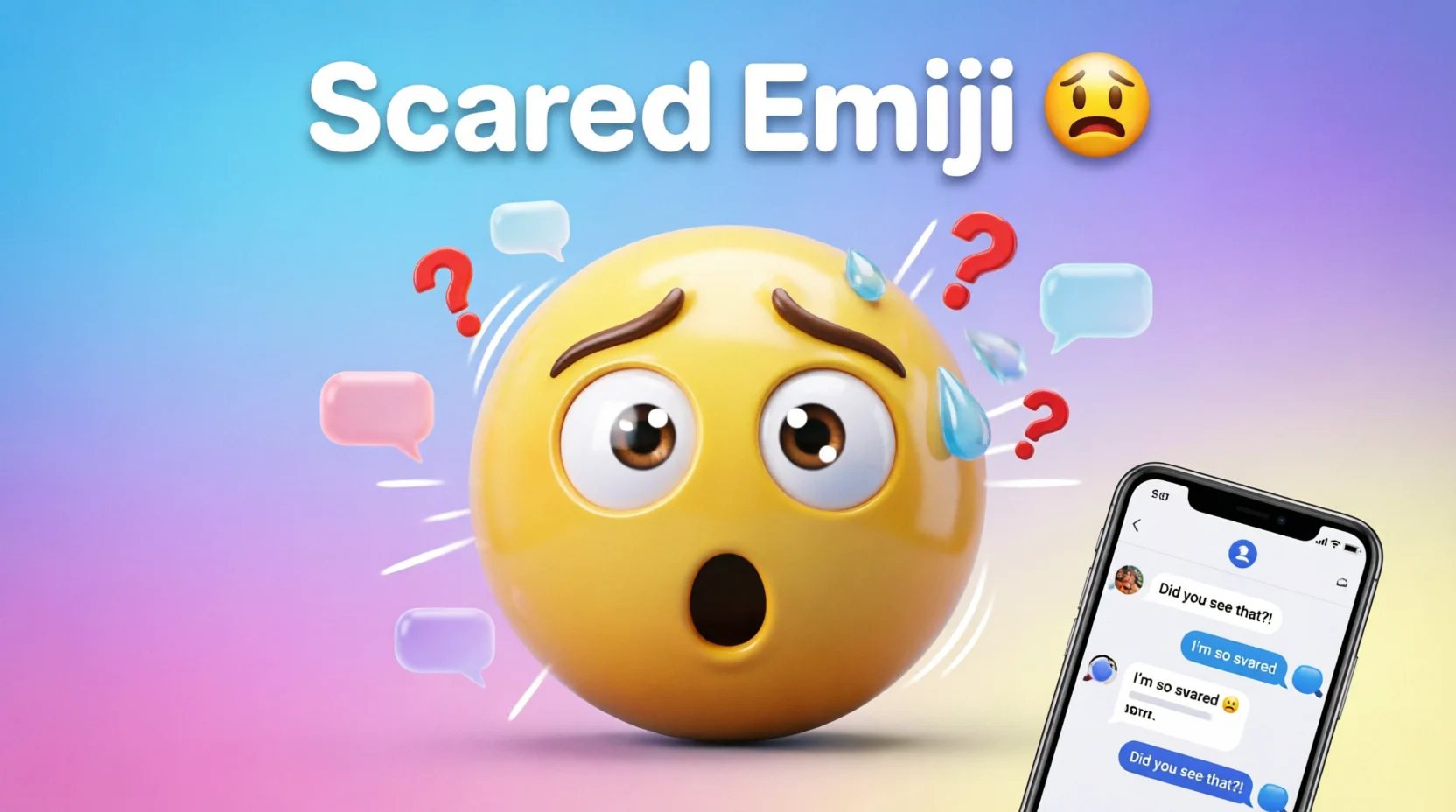
The scared emoji 😨 is commonly used to show fear, worry, anxiety, nervousness, shock, or concern. Its wide-open eyes, raised eyebrows, and worried expression make it useful when something feels frightening or alarming. People often send 😨 in texts, social media comments, captions, and online conversations to react to bad news, scary situations, unexpected events, or something that makes them uncomfortable.
However, the scared emoji does not always mean serious fear. Depending on the conversation, it can also express nervousness, disbelief, embarrassment, or a dramatic reaction to something surprising. Understanding the context is important because the same emoji can communicate different shades of emotion.
Quick Answer: What Does the Scared Emoji 😨 Mean?
The 😨 scared emoji usually means fear, fright, worry, nervousness, or anxiety. It can be used when someone sees something scary, receives worrying news, feels nervous about an upcoming situation, or wants to react dramatically to an unexpected message.
For example:
- “I heard a strange noise downstairs 😨”
- “My exam is tomorrow 😨”
- “You actually did that? 😨”
- “That movie was terrifying 😨”
The exact meaning depends on the words around the emoji and the relationship between the people communicating.
What Does the Scared Emoji 😨 Mean?
The 😨 emoji is officially associated with a fearful or worried facial expression. It typically shows a face with wide eyes, raised eyebrows, an open mouth, and a tense expression.
Its main emotional meanings include:
| Meaning | Example |
|---|---|
| Fear | “Something is moving outside 😨” |
| Worry | “I hope everything is okay 😨” |
| Nervousness | “I have to speak in front of everyone 😨” |
| Anxiety | “I don’t know what will happen 😨” |
| Shock | “Wait, you paid how much? 😨” |
| Concern | “You haven’t slept all night 😨” |
| Dramatic reaction | “You ate the whole cake? 😨” |
The emoji can therefore communicate anything from genuine fear to playful exaggeration.
What Emotion Does 😨 Show?
At its core, 😨 communicates an uncomfortable emotional reaction. The person using it may feel threatened, uncertain, surprised, or worried about what is happening.
Fear
This is the most direct interpretation.
“There was a snake near the door 😨”
Here, the emoji clearly expresses fright.
Worry
It can also communicate concern rather than actual fear.
“He hasn’t answered his phone all day 😨”
In this example, the person is worried about someone.
Nervousness
The emoji can describe an upcoming event that makes someone uncomfortable.
“My job interview starts in ten minutes 😨”
There may be no immediate danger. Instead, the emoji represents nervous anticipation.
Shock
Sometimes 😨 is used when something is unexpectedly intense.
“The final bill was $800 😨”
The reaction may be closer to disbelief than fear.
Scared Emoji 😨 vs. Fearful Emoji 😱
The 😨 and 😱 emojis are often confused because both can express fear. However, they usually create different emotional impressions.
| Emoji | Common feeling | Typical intensity |
|---|---|---|
| 😨 | Fear, worry, nervousness | Moderate |
| 😱 | Terror, extreme shock, screaming | Very high |
| 😰 | Anxiety, nervousness, worry | Moderate |
| 😧 | Distress, concern, discomfort | Moderate |
| 😳 | Embarrassment, surprise | Varies |
| 😬 | Nervousness, awkwardness | Mild to moderate |
The 😱 face often feels much more dramatic. It may suggest screaming, horror, or extreme shock.
The 😨 emoji usually feels more like being frightened, worried, or nervous.
For example:
Mild fear:
“I think I heard something outside 😨”
Extreme fear:
“There was a huge spider on my bed 😱”
The distinction is not absolute because people use emojis creatively.
When Should You Use the Scared Emoji 😨?
You can use 😨 whenever you want to add a visual expression of fear, worry, nervousness, or concern to a message.
1. When Something Is Actually Scary
If you experience a frightening situation, 😨 can communicate your reaction quickly.
“That dog suddenly ran toward me 😨”
2. Before an Important Event
It works well when you are nervous about an exam, interview, presentation, or appointment.
“Tomorrow is my final exam 😨”
3. After Hearing Bad News
The emoji can show concern or emotional discomfort.
“They canceled the entire trip 😨”
4. When Something Is Unexpected
You can use it as a reaction to surprising information.
“You finished all of that in one hour? 😨”
5. For Funny Dramatic Reactions
Friends often use 😨 jokingly.
“You said you don’t like pizza? 😨”
Here, the emoji is obviously not showing genuine fear.
Scared Emoji 😨 in Text Messages
In texting, emojis help communicate emotions that would otherwise be difficult to understand from plain words.
Consider these two messages:
“I have an exam tomorrow.”
This sounds neutral.
“I have an exam tomorrow 😨.”
The emoji adds nervousness and makes the emotional meaning clearer.
Likewise:
“Don’t open that door.”
This sounds serious.
“Don’t open that door 😨.”
The emoji makes the message feel more fearful or suspenseful.
Because text does not include facial expressions or tone of voice, 😨 can provide important emotional context.
Scared Emoji 😨 on Social Media
The emoji is also common in comments, captions, posts, and reactions.
People may use it when discussing:
- Horror movies
- Scary stories
- Unexpected news
- Dangerous situations
- Creepy experiences
- Exams
- Difficult challenges
- Unexpected prices
- Embarrassing moments
- Dramatic situations
For example:
“That plot twist 😨”
“Me checking my bank account after shopping 😨”
“That horror movie ending 😨”
The meaning changes according to the subject.
😨 Meaning in Different Conversations
Context is especially important when interpreting emojis.
| Conversation | Possible meaning of 😨 |
|---|---|
| “I saw a ghost 😨” | Genuine fear |
| “The exam is tomorrow 😨” | Nervousness |
| “Look at this bill 😨” | Shock |
| “Don’t tell Mom 😨” | Worry or nervousness |
| “You actually said that? 😨” | Surprise |
| “That movie was scary 😨” | Fear |
| “You don’t eat chocolate? 😨” | Playful disbelief |
This is why an emoji should not always be interpreted literally.
Scared Emoji 😨 vs. Worried Emoji 😰
The 😨 emoji and 😰 emoji can both represent anxiety or discomfort, but their visual expressions are different.
😨 generally gives a stronger impression of fear or fright.
😰 often communicates nervousness, anxiety, worry, or stress, especially because of the visible sweat.
Compare:
“I heard footsteps behind me 😨”
This suggests fear.
“I hope I pass tomorrow’s exam 😰”
This suggests anxiety or nervousness.
There is considerable overlap, so the surrounding message remains important.
Scared Emoji 😨 vs. Shocked Emoji 😱
A shocked reaction can sometimes be expressed with either 😨 or 😱.
Use 😨 when the reaction feels worried, frightened, or uneasy.
Use 😱 when the reaction is much more dramatic, such as extreme shock or horror.
For example:
😨:
“I think I made a mistake.”
😱:
“I accidentally deleted the entire project!”
Again, these are common interpretations rather than strict rules. Emoji meanings can vary between communities and individuals.
Common Ways to Use 😨
Here are some natural examples:
- “I don’t know what that sound was 😨”
- “The deadline is tonight 😨”
- “That was way too close 😨”
- “I just saw the price 😨”
- “Why would you do that 😨”
- “The elevator stopped suddenly 😨”
- “I forgot about the test 😨”
- “That ending scared me 😨”
- “You scared me 😨”
- “I have to tell my parents 😨”
These examples show how the emoji can work with both serious and casual conversations.
Can 😨 Be Used as a Joke?
Yes. Emojis are frequently used in humorous and exaggerated ways.
For example:
“My phone battery is at 2% 😨”
The situation is not genuinely dangerous, but the person is pretending that it is extremely serious.
Another example:
“They ran out of fries 😨”
The emoji exaggerates disappointment or disbelief for comedic effect.
This playful use is especially common among friends and on social media.
Common Mistakes When Using 😨
Although there is no single correct way to use an emoji, some uses can create confusion.
Using It for Happiness
😨 does not normally communicate happiness, excitement, or celebration.
If you want to express happiness, emojis such as 😊, 😄, or 🥳 may be clearer.
Using It When You Mean Anger
😨 usually does not communicate anger.
For anger, people commonly use 😠 or 😡.
Using It Without Context
A single 😨 message can be confusing.
If you send only:
“😨”
The other person may wonder whether you are scared, shocked, worried, or joking.
Adding a few words can make your meaning clearer.
Overusing It
Using 😨 after every sentence can weaken its emotional effect.
For example:
“Good morning 😨”
“I’m eating breakfast 😨”
“The weather is nice 😨”
Unless you are deliberately being humorous, these uses may seem confusing.
Practical Tips for Using 😨 Naturally
To use the scared emoji effectively, consider the emotional tone of your message.
Use 😨 for:
- Fear
- Worry
- Nervousness
- Concern
- Uneasiness
- Unexpected shock
- Playful exaggeration
Avoid using 😨 when you clearly mean:
- Happiness
- Love
- Celebration
- Gratitude
- Anger
- Relaxation
Also consider your audience. A close friend may immediately understand a dramatic 😨, while a coworker or professional contact could interpret it more literally.
FAQs:😨
1. What does the 😨 emoji mean?
The 😨 emoji usually means fear, fright, worry, nervousness, anxiety, or concern. It can also express shock or a dramatic reaction depending on the context.
2. Is 😨 the same as 😱?
No. Both can express fear, but 😨 generally feels more worried or moderately frightened, while 😱 often suggests extreme shock, terror, or a dramatic reaction.
3. What does 😨 mean from a friend?
From a friend, 😨 may mean genuine fear, nervousness, concern, or playful disbelief. The surrounding message usually reveals which meaning is intended.
4. Can 😨 mean nervous?
Yes. Someone may use 😨 before an exam, interview, presentation, appointment, or other stressful event to show nervousness.
5. Can I use 😨 for something funny?
Yes. People frequently use 😨 as a humorous exaggeration. For example, “There are no snacks left 😨” can be a playful way to show dramatic disappointment.
6. What is the difference between 😨 and 😰?
😨 usually emphasizes fear or fright, while 😰 often emphasizes anxiety, worry, nervousness, or stress. Their meanings overlap in many conversations.
7. Is 😨 a negative emoji?
It generally represents an uncomfortable emotion such as fear, worry, or nervousness. However, using it jokingly can make it humorous rather than genuinely negative.
8. What should I reply to 😨?
Your response depends on the situation. If someone is genuinely scared, you can ask, “What happened?” If they are joking, you can respond playfully, such as “What did you see?”
Conclusion
The scared emoji 😨 is a flexible expression used to communicate fear, worry, nervousness, concern, shock, and sometimes playful exaggeration. Its exact meaning depends heavily on the words, situation, and relationship between the people communicating. Unlike emojis with a more specific emotional purpose, 😨 can fit many everyday situations, from scary experiences and stressful exams to funny reactions and unexpected news.
The easiest way to understand 😨 is to focus on the overall conversation rather than the emoji alone. When someone sends it after describing something frightening, it probably means genuine fear. When it appears after surprising or funny information, it may simply express dramatic disbelief. Used with the right context, 😨 can make digital conversations more expressive, natural, and emotionally clear.

I create fun, creative pickup lines and flirty messages that help people feel confident, spark conversations, and make their chats more playful, memorable, and enjoyable.