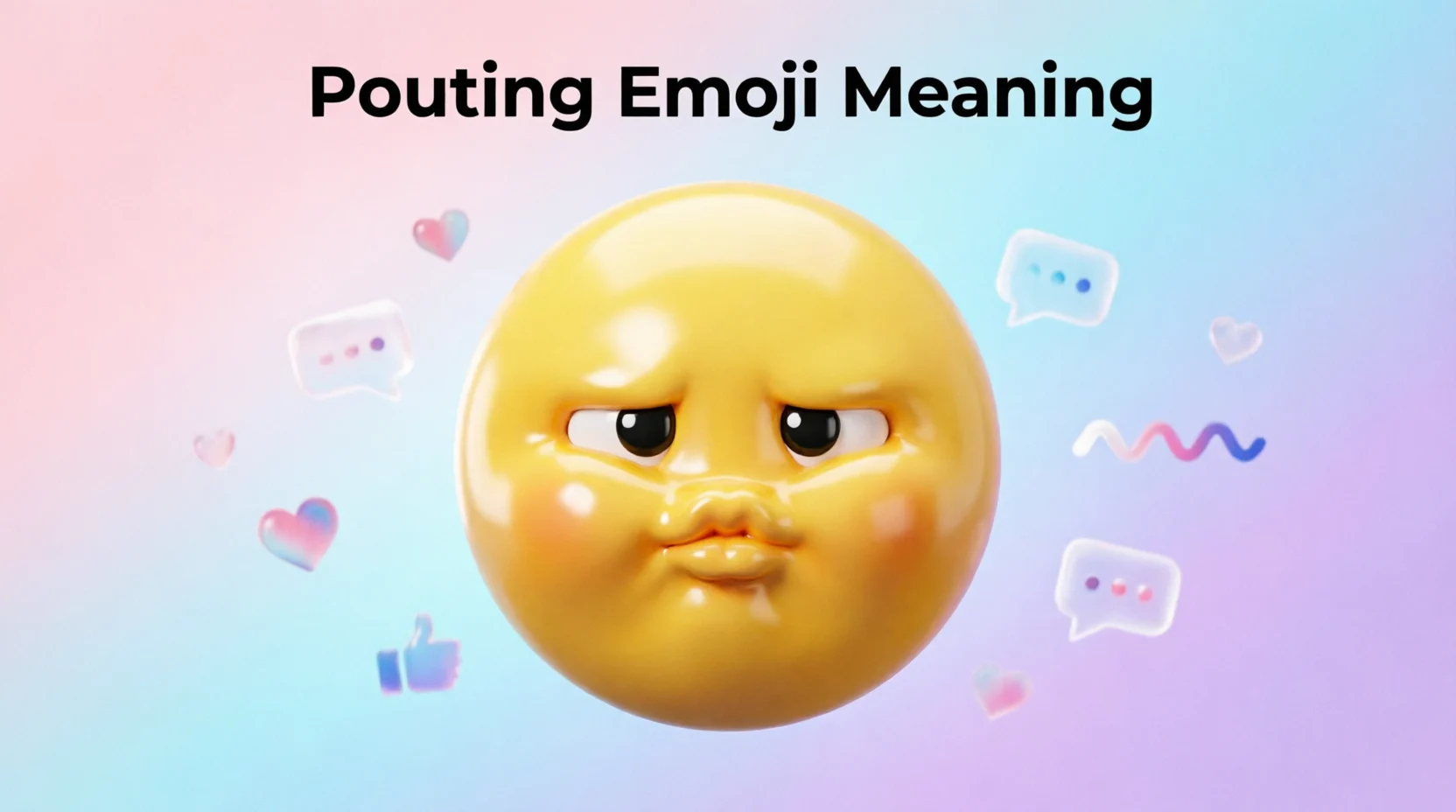
The pouting emoji 😡 represents anger, frustration, annoyance, or strong displeasure. People often use it in text messages, social media captions, and online conversations when something makes them upset or irritated. Its red face, angry eyes, and frowning mouth make it a powerful way to express negative emotions without writing a long explanation.
However, the pouting emoji can communicate different feelings depending on the conversation. Someone might use 😡 to show genuine anger, playful frustration, or disappointment with a friend. It is also important to distinguish the pouting face from similar emojis, such as 😠 (angry face), 😤 (face with steam from nose), and 😒 (unamused face). Understanding these differences helps you choose the right emoji for every situation.
Quick Answer: What Does the Pouting Emoji 😡 Mean?
The pouting emoji 😡 means anger, irritation, frustration, or strong displeasure. It is commonly used when someone is upset about a situation, disagrees with something, or wants to show that they are not happy.
Here is a quick overview:
| Emoji | Name | Common Meaning |
| 😡 | Pouting Face | Strong anger or displeasure |
| 😠 | Angry Face | Anger, irritation, or annoyance |
| 😤 | Face with Steam From Nose | Frustration, determination, or triumph |
| 😒 | Unamused Face | Disapproval, boredom, or annoyance |
| 😣 | Persevering Face | Struggling, distress, or frustration |
| 😞 | Disappointed Face | Sadness or disappointment |
| 😾 | Pouting Cat | Anger or displeasure expressed by a cat |
Although 😡 is officially called the Pouting Face, it is widely understood as an angry face. Its meaning depends on the words, relationship, and situation surrounding it.
What Is the Pouting Emoji?
😡
Pouting Face emoji
The pouting emoji is a yellow face with angry-looking eyes, lowered eyebrows, and a frowning mouth. Many platforms display it with a reddish face, emphasizing the emotion of anger.
It belongs to the facial-expression emojis used in digital communication. Rather than expressing happiness or sadness, it communicates displeasure and emotional intensity.
The emoji can be used in several ways:
- Showing that something has made you angry.
- Expressing frustration about a problem.
- Reacting to an unfair or annoying situation.
- Playfully pretending to be mad at a friend.
- Emphasizing disagreement or dissatisfaction.
- Showing that you are upset without writing a lengthy message.
For example, if your friend cancels plans at the last minute, you might respond, “You promised we would meet today 😡.” The emoji emphasizes your disappointment and irritation.
However, if you send the same emoji to a colleague or someone you do not know well, they may interpret it as a serious expression of anger.
Why Is It Called the Pouting Emoji Instead of the Angry Emoji?
The official Unicode name is Pouting Face, even though many people search for it as the angry emoji.
In everyday English, pouting usually describes pushing out the lips or making a displeased facial expression, often because someone is unhappy or frustrated. The 😡 emoji combines that displeased expression with visibly angry features.
This explains why people use several names for the same symbol:
- Pouting emoji
- Angry emoji
- Red angry face
- Mad face emoji
- Angry red face
- Furious face emoji
These names can overlap in casual conversation, but they are not all official emoji names.
The distinction matters because people may use “pouting” to describe mild displeasure, while “angry” and “furious” suggest stronger emotions. In actual messages, the emoji can represent anything from playful annoyance to genuine anger.
What Does the Pouting Emoji Mean in Text Messages?
The meaning of 😡 changes with the context. Here are some of the most common interpretations.
1. Anger
The most common meaning is that something has made the sender angry.
Example:
“Why did you delete my message? 😡”
The emoji emphasizes that the sender is upset about what happened.
2. Frustration
Sometimes, people use the pouting emoji when something is not working as expected.
Example:
“My internet stopped working again 😡.”
Here, the sender is expressing frustration rather than necessarily being angry with another person.
3. Disappointment
The emoji may communicate disappointment when expectations are not met.
Example:
“You said you would help me today 😡.”
The sender may feel let down and want the other person to understand their displeasure.
4. Playful Anger
Friends and couples sometimes use 😡 jokingly when teasing one another.
Example:
“You ate the last slice of pizza without me? 😡😂”
The laughing emoji softens the message, suggesting that the anger may not be serious.
5. Disapproval
The pouting emoji can also show that someone strongly dislikes an action, decision, or situation.
Example:
“They changed the plan without telling anyone 😡.”
In this case, the emoji expresses disapproval and dissatisfaction.
Pouting Emoji Meaning From a Girl
When a girl sends 😡, the meaning depends on your relationship and the conversation. It does not automatically indicate romantic interest or serious anger.
Here are some possible interpretations:
| Situation | Possible Meaning | Example |
| She is joking with you | Playful anger | “You forgot my chocolate 😡😂” |
| You broke a promise | Genuine frustration | “You said you would call 😡” |
| You teased her | Pretending to be annoyed | “Stop teasing me 😡” |
| She disagrees with you | Disapproval | “That is not what I meant 😡” |
| You ignored an important message | She may be upset | “You saw my message and didn’t reply 😡” |
If you are unsure whether she is joking or genuinely angry, look at the rest of the conversation. Her words, your previous interaction, and the seriousness of the situation offer better clues than the emoji alone.
A calm response is usually more helpful than assuming what she feels.
Pouting Emoji Meaning From a Boy
When a boy sends 😡, he may be expressing frustration, annoyance, disappointment, or playful anger. The emoji does not have a completely different meaning based on gender.
For example:
- “My team lost again 😡” expresses frustration.
- “You didn’t save me any food 😡😂” may be playful.
- “Why didn’t you tell me earlier? 😡” may indicate genuine annoyance.
- “That was completely unfair 😡” communicates disapproval.
Some people use angry emojis dramatically to make ordinary complaints sound funnier. Others use them when they are genuinely upset. Therefore, it is better to interpret the complete message rather than making assumptions based on who sent it.
How to Use the Pouting Emoji in Different Situations
The 😡 emoji can work in personal conversations, social media posts, and casual online discussions. However, its suitability depends on the audience.
Pouting Emoji on WhatsApp
WhatsApp conversations often involve friends, relatives, and close contacts. In these settings, the pouting emoji can communicate annoyance without requiring a long explanation.
Examples:
- “You forgot to tell me 😡.”
- “Why are you always late? 😡😂”
- “My favorite team lost again 😡.”
- “You finished the snacks without me 😡😭.”
- “I am not talking to you for five minutes 😡😂.”
The last example sounds playful because the message exaggerates the reaction and includes a laughing emoji.
Pouting Emoji on Instagram
On Instagram, 😡 can appear in captions, comments, stories, and replies.
Examples:
- “Not happy about this 😡.”
- “When the plans change at the last minute 😡.”
- “That ending made me so mad 😡.”
- “Me when someone touches my food 😡😂.”
- “Trying to stay calm, but it is not working 😡.”
For humorous posts, pairing the pouting emoji with 😂 or 🤣 can make the intended tone clearer.
Pouting Emoji on TikTok
TikTok users may use 😡 in reaction videos, relatable jokes, dramatic lip-syncs, or comments about frustrating situations.
Examples:
- “When your alarm rings on a Monday 😡.”
- “POV: Your food arrives cold 😡.”
- “When someone spoils the ending 😡😭.”
- “Me after losing the game by one point 😡🎮.”
- “When the video buffers at the best part 😡.”
In these examples, the emoji exaggerates an everyday reaction for entertainment.
Pouting Emoji in Romantic Conversations
Couples may use the emoji to express mild frustration, jealousy, or playful displeasure. However, the symbol alone cannot tell you whether someone is flirting, upset, or joking.
Examples:
- “You forgot our little promise 😡❤️.”
- “You were supposed to call me 😡🥺.”
- “You went out without telling me? 😡.”
- “Fine, I am pretending to be mad now 😡😂.”
When the conversation involves a real disagreement, do not rely on emojis to resolve it. A clear and respectful conversation is more effective.
Best Pouting Emoji Combinations and Their Meanings
Combining 😡 with other emojis can change the tone of a message. Some combinations emphasize anger, while others make it playful or dramatic.
😡😂
Angry but joking
Use when something is annoying but also funny.
Copy
😡😭
Frustrated and overwhelmed
For dramatic reactions to disappointing situations.
Copy
😡❤️
Affectionate annoyance
Can suggest playful frustration between close people.
Copy
😡🔥
Intense anger
Emphasizes strong displeasure or an angry reaction.
Copy
😡💢
Extra frustration
The anger symbol reinforces the idea of irritation.
Copy
😡👊
Angry or confrontational
May sound aggressive, so use carefully.
Copy
😡🙄
Anger and exasperation
Shows annoyance with someone’s behavior or a situation.
Copy
😡🥺
Upset or pleading
Can soften an angry expression with a sad or pleading tone.
Copy
Remember that emoji combinations do not have universal meanings. The same combination may be playful between close friends but seem hostile in a serious conversation.
Pouting Emoji vs. Angry Emoji vs. Other Similar Emojis
Several emojis communicate negative emotions, but their expressions and common uses differ.
😡
Pouting Face
Expresses strong displeasure, anger, or frustration. Its reddish appearance on many platforms makes the emotion look intense.
Example: “That was unfair 😡.”
😠
Angry Face
Shows anger or annoyance with a yellow face and a frowning expression. It is similar to 😡 but usually lacks the latter’s red coloring.
Example: “I don’t like that decision 😠.”
😤
Face With Steam From Nose
Often expresses frustration, determination, or triumph. Its meaning depends heavily on context.
Example: “I am going to finish this task 😤.”
😒
Unamused Face
Communicates dissatisfaction, skepticism, boredom, or mild annoyance. It often feels less intense than 😡.
Example: “You made that same excuse again 😒.”
In short, choose 😡 for strong displeasure, 😠 for general anger, 😤 for frustration or determination, and 😒 for a unimpressed reaction.
What Does the Pouting Emoji Look Like on Different Devices?
The Unicode character for the pouting face is the same underlying emoji across supported platforms, but its visual design can differ.
Apple, Google, Microsoft, and other vendors create their own artwork. As a result, the face may appear redder, more orange, or slightly different in shape depending on your phone, computer, application, and operating system.
These differences generally do not change the core meaning. However, the surrounding text and the recipient’s interpretation still matter.
If the emoji looks different on your device, it does not necessarily mean you are using a different symbol. You may simply be viewing the platform’s version of the same Unicode emoji.
Common Mistakes When Using the Pouting Emoji
Even a simple emoji can cause confusion when the tone is unclear. Here are some mistakes worth avoiding.
1. Assuming It Always Means Serious Anger
People sometimes use 😡 jokingly to exaggerate a minor inconvenience. Do not automatically assume the sender is furious.
2. Confusing It With the Unamused Face
The 😒 emoji usually suggests dissatisfaction or skepticism, whereas 😡 more strongly conveys anger or displeasure.
3. Using It in a Sensitive Conversation Without Explanation
If someone shares upsetting news, replying with only 😡 might leave them unsure what you mean. Add words to explain whether you are angry on their behalf or upset about the situation.
4. Sending It in a Formal Workplace Message
An angry face may appear unprofessional or confrontational in a formal email. Explain the issue clearly and respectfully instead.
5. Using It to Guess Someone’s Feelings
One emoji cannot reliably reveal a person’s intentions, relationship interest, or emotional state. Consider the full conversation and ask politely when necessary.
Practical Tips for Using the Pouting Emoji Correctly
Use these simple tips to make your messages clearer and more natural:
- Match the emotion: Use 😡 when you want to emphasize anger or strong displeasure.
- Add context: Write a short explanation if the reason for your reaction is not obvious.
- Soften playful anger: Combine 😡 with 😂 when you want to make a joke more obvious.
- Consider your audience: A close friend may understand your humor better than a colleague or stranger.
- Avoid unnecessary repetition: One emoji can communicate your reaction without making the message look aggressive.
- Respect serious conversations: If someone is genuinely hurt, respond with empathy rather than relying on an emoji alone.
- Remember platform differences: The emoji’s appearance may vary between devices, but its general meaning remains similar.
FAQs:
1. What is the official name of the 😡 emoji?
Its official Unicode name is Pouting Face. However, many people call it the angry emoji, mad face, or red angry face because it commonly expresses anger and displeasure.
2. Does 😡 mean angry or sad?
It primarily expresses anger, irritation, or strong displeasure. It may accompany disappointment, but it is not generally considered a sadness emoji.
3. What does 😡 mean from a girl?
It may mean she is angry, annoyed, disappointed, or jokingly pretending to be upset. The exact meaning depends on the conversation and your relationship.
4. What does 😡 mean from a boy?
A boy may use it to express frustration, disagreement, anger, or playful annoyance. The emoji does not have a gender-specific meaning.
5. Is the pouting emoji stronger than 😠?
The 😡 emoji often appears more intense because it is red on many platforms. Both represent anger, and their perceived intensity depends on context and personal interpretation.
6. What does 😡😂 mean?
This combination often suggests that someone is angry in a humorous or exaggerated way. However, the surrounding message determines whether the person is genuinely upset.
7. Can the pouting emoji be used romantically?
Yes. Couples may use it to express playful annoyance or mild disappointment. However, 😡 alone does not prove that someone is flirting or expressing romantic interest.
8. How can I copy the pouting emoji?
You can copy this symbol directly: 😡. Select it, copy it, and paste it into a compatible messaging app, social media caption, or comment.
Conclusion
The pouting emoji 😡 is a popular way to express anger, irritation, frustration, and strong displeasure in digital conversations. Although its official name is Pouting Face, many people recognize it as the angry emoji because of its frowning expression and reddish appearance. It can be used in WhatsApp messages, Instagram captions, TikTok comments, and personal conversations to communicate emotions quickly.
To use it effectively, consider the context, your relationship with the recipient, and the tone of your message. Pairing 😡 with emojis such as 😂, ❤️, or 🙄 can create different meanings, but adding clear words is often the best way to prevent misunderstandings. If you are genuinely upset or joking with a friend, choosing the right expression helps your message communicate exactly what you intend.

I’m Connor James, an administrator at FlirtyLinz, passionate about pickup lines, playful conversations, dating, and helping readers find fun, confident, and creative ways to start conversations.